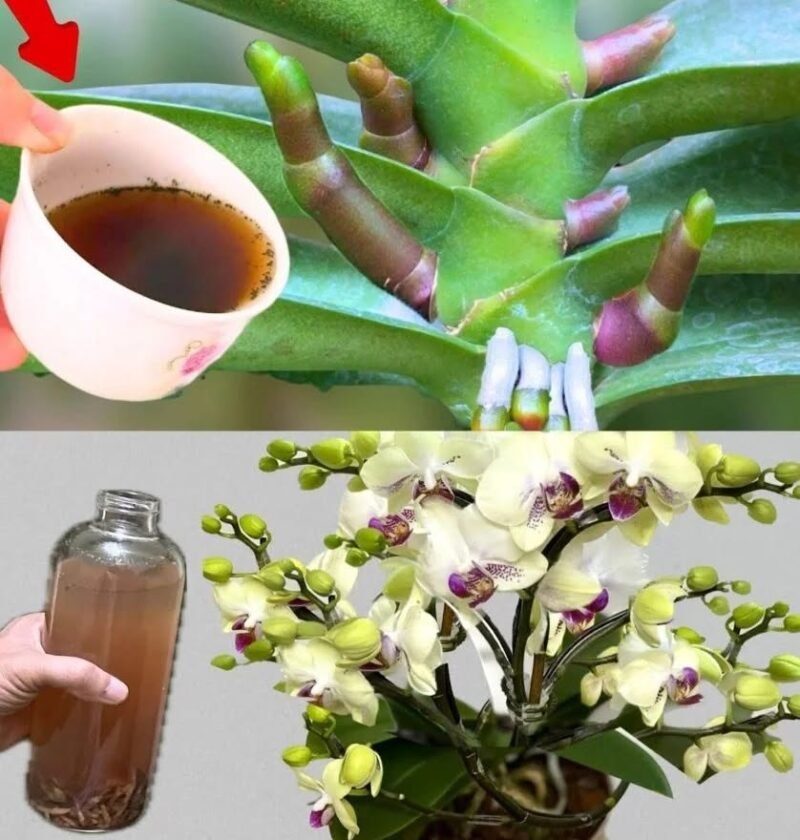
The Truth About Common “Miracle” Orchid Waters
| DIY Ingredient | What Clickbait Claims | What Actually Happens in the Pot |
| Rice Water | Feeds roots with B vitamins and starches for explosive growth. | Starches feed mold, bacteria, and fungus gnats in bark media, suffocating the roots. |
| Banana Peel Tea | Delivers a massive potassium boost for bigger flowers. | Decomposing sugars attract pests and cause root rot; raw potassium isn’t immediately bioavailable without soil microbes orchids lack. |
| Garlic / Onion Water | Acts as a natural fungicide and growth stimulant. | Kills beneficial fungi on orchid roots and leaves a lingering odor without solving underlying care issues. |
| Milk / Eggshell Water | Adds calcium for stronger leaves and spikes. | Milk rots and smells awful; eggshells take years to break down and won’t release calcium in chunky orchid bark. |
What Actually Makes an Orchid “10 Times More Beautiful”
-
Balanced Water-Soluble Orchid Fertilizer (“Weakly, Weekly”)
-
Use a urea-free orchid fertilizer (such as 20-20-20 for leafy growth or a bloom-booster formula when spikes emerge).
-
Dilute it to 1/4 to 1/2 the recommended strength and apply it every time you water, flushing the pot with plain water once a month to prevent mineral salt buildup.
-
-
A Slight Nighttime Temperature Drop (The Secret to Blooms)
-
If your orchid has plenty of healthy green leaves (“very leafy”) but refuses to bloom, fertilizer is rarely the missing piece. Most Phalaenopsis orchids need a 10–15°F (5–8°C) drop in nighttime temperatures for 2–3 weeks in autumn or winter to trigger a flower spike.
-
-
Bright, Indirect Light
-
Dark green, lush leaves actually indicate the orchid is getting slightly too little light to bloom. Aim for bright, filtered light (like an east-facing window) where the leaves turn a healthy medium olive-green.
-
-
Seaweed or Kelp Extract (The One Safe Organic Additive)
-
If you want a natural root booster, use a commercial liquid kelp/seaweed extract diluted in water. Unlike kitchen scraps, it contains natural plant hormones (cytokinins and auxins) without sugars or starches that rot the bark.
-
Quick Watering Best Practices
-
Water only when roots turn silvery-gray (if they are bright green, wait).
-
Use room-temperature water—rainwater, distilled water, or filtered tap water works best, as hard tap water leaves white mineral deposits on roots.
-
Keep water out of the crown (the center where new leaves emerge) to prevent crown rot.