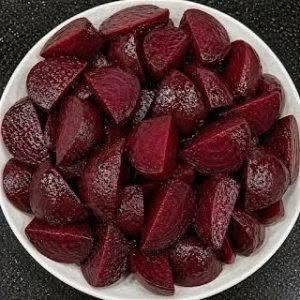
What Eating Beets Actually Causes in the Body
-
Lower Blood Pressure & Improved Blood Flow (Beneficial):
-
Why it happens: Beets are rich in dietary nitrates, which oral bacteria and stomach acid convert into nitric oxide—a molecule that relaxes and widens blood vessels (vasodilation).
-
What research shows: Drinking beetroot juice or eating cooked beets regularly modestly lowers systolic blood pressure (typically by 3–5 mmHg) and improves exercise stamina by reducing the oxygen cost of physical exertion.
-
Practical note: Using strong antibacterial mouthwash right before or after eating beets blocks the mouth bacteria needed to convert nitrates into nitric oxide, blunting the blood pressure effect.
-
-
Pink or Red Urine and Stool — Beeturia (Harmless):
-
Why it happens: Red beets get their deep color from pigments called betalains (betanin). In roughly 10% to 14% of people (especially those with lower stomach acid or iron deficiency), some pigment passes through digestion unabsorbed, turning urine pink/red or coloring stool reddish-purple for 24–48 hours.
-
The catch: While beeturia itself is completely harmless, never assume red stool or red urine is just from beets if it persists after beets clear your system or appears without having eaten beets—always have a doctor rule out blood in the urine or digestive tract.
-
-
Higher Kidney Stone Risk in Stone-Formers (Caution Needed):
-
Why it happens: Beets and beet greens are very high in soluble oxalates, compounds that bind with calcium in the kidneys to form calcium oxalate kidney stones—the most common type of kidney stone.
-
Who should limit them: People with a personal history of calcium oxalate kidney stones should keep beet portions small, pair them with calcium-rich foods (like yogurt or feta cheese, which bind oxalate in the gut before it reaches the kidneys), and stay well hydrated.
-
-
Faster Bowel Movements & Liver/Metabolic Support (Modest Benefit):
-
Why it happens: One cup of cooked beets supplies roughly 3.4 grams of fiber, folate, potassium, manganese, and betaine—an amino acid derivative that supports normal liver fat metabolism and lowers homocysteine.
-
The clickbait exaggeration: Viral posts often claim beets “detox” or “flush out” a diseased liver overnight; in reality, your liver detoxifies your body on its own, and beets simply provide helpful fiber and antioxidants as part of a balanced diet.
-
Summary: Who Benefits vs. Who Should Moderate Beets
-
Great addition for: Adults looking to support healthy blood pressure, heart health, digestion, or workout endurance.
-
Moderate or check with a doctor if: You form calcium oxalate kidney stones, have low blood pressure (beets can add slightly to blood pressure medication effects), or experience IBS bloating from high-FODMAP foods (beets contain fructans in larger servings).