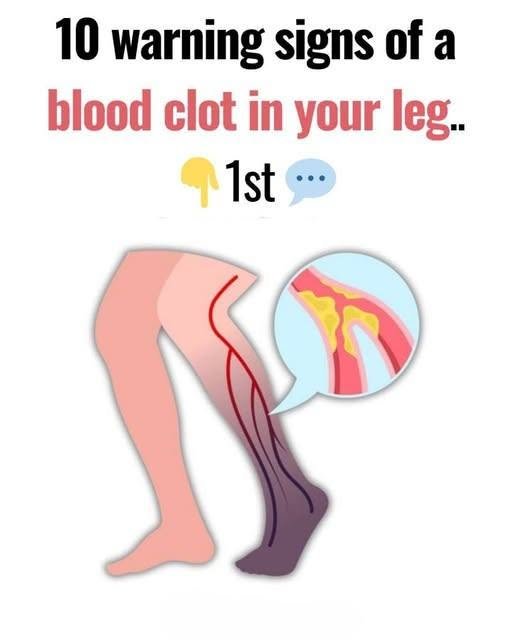
10 Warning Signs of a Blood Clot in the Leg
A blood clot in a deep vein is called deep vein thrombosis (DVT). It most often occurs in the leg and can become dangerous if part of the clot travels to the lungs. Importantly, about half of DVTs cause no symptoms at all, so symptoms alone cannot rule one out.
C
CDC
+1
Possible warning signs include:
Swelling in one leg, especially when it appears suddenly.
Pain or tenderness without an obvious injury.
Unexplained aching or cramping, often in the calf.
Warmth over the affected area.
Redness or unusual discoloration of the skin.
One leg becoming noticeably larger than the other.
A feeling of tightness or heaviness in the affected leg.
Pain that becomes more noticeable when standing or walking.
New swelling or discomfort after prolonged immobility, such as a long trip, hospitalization, or bed rest.
Symptoms that appear together—particularly swelling plus pain, warmth, and redness.
C
CDC
+1
However, these symptoms do not prove that you have a clot. Muscle injuries, skin infections, and other conditions can look similar. Proper diagnosis requires medical assessment and, when appropriate, tests such as an ultrasound.
C
CDC
🚨 Know the emergency signs
A DVT can break loose and travel to the lungs, causing a pulmonary embolism (PE). Get emergency medical help immediately if you develop:
Sudden difficulty breathing
Chest pain, especially pain that worsens with deep breathing or coughing
Coughing up blood
A very fast or irregular heartbeat
Severe light-headedness or fainting
C
CDC
+1
Bottom line: Don’t try to diagnose a blood clot at home or massage a suspicious swollen leg. New unexplained swelling, pain, warmth, or redness in one leg deserves prompt medical evaluation, while breathing difficulty or chest pain requires emergency care.
C
Sources