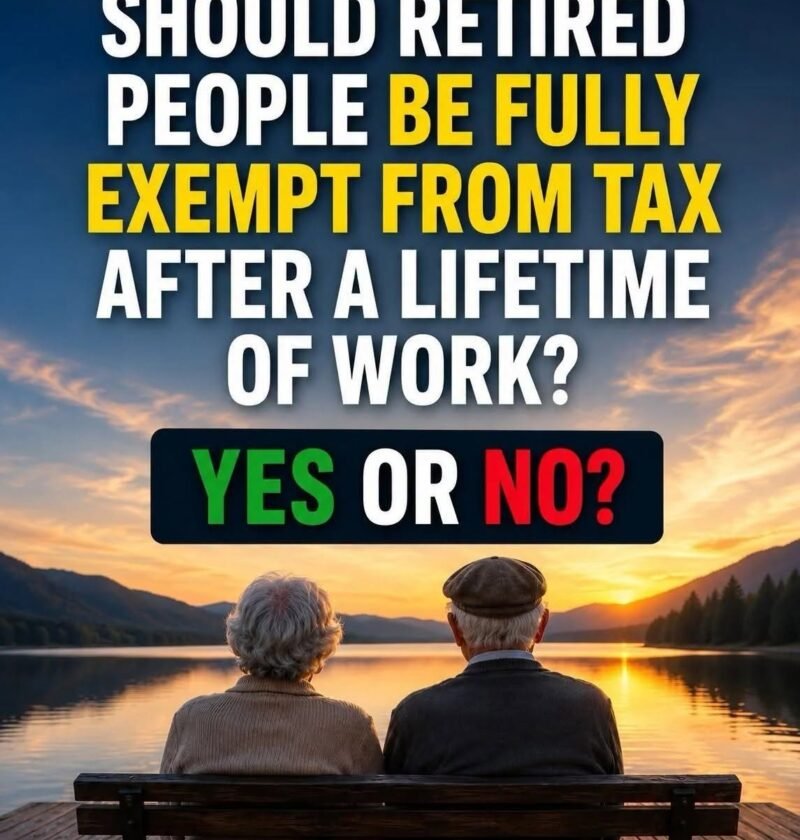
Why Supporters Argue Retirees Should Be Tax-Exempt
-
Perceived “Double Taxation”: Many retirees feel they already contributed income and payroll taxes across 30–40 years of working, and taxing pensions or savings interest feels like paying twice on the same lifetime effort.
-
Fixed Incomes vs. Rising Medical Costs: Unlike younger workers who can earn overtime or negotiate raises, retirees often rely on fixed pensions or savings while healthcare, utility, and grocery bills climb.
-
Reduced Compliance Burden: Exempting modest retirement income spares older citizens from complex tax filings, consultant fees, and paperwork.
-
Social Recognition: Advocates view tax relief in old age as fair recognition for decades of productive work.
Why Economists & Policymakers Oppose a Blanket Exemption
-
Windfall for Wealthy Retirees: A blanket age-based rule would allow a retired billionaire or major landowner to pay zero tax on huge rental, dividend, or business profits, while a 25-year-old entry-level worker pays full income tax.
-
Shrinking Revenue in Aging Populations: As people live longer and spend more years in retirement, exempting every retiree shifts a heavier tax burden onto younger working families or forces cuts to public healthcare and pension funds.
-
Tax-Deferred Earnings Were Never Taxed Yet: In many pension and retirement account systems, employer contributions and investment gains grew tax-deferred during working years—meaning withdrawal is the first time that income is ever taxed.
-
Ability-to-Pay Fairness: Modern tax systems aim for horizontal equity—two households with the same income and expenses have the same ability to fund public roads, hospitals, and utilities, regardless of birth year.
Real Tax Rules vs. Viral “Senior Tax-Free” Rumors (2026)
-
Pakistan (Current FBR Rules): Viral posts claiming all citizens over 60 automatically get a “50% tax discount” or total tax exemption are false (a former 50% senior citizen rebate was withdrawn back in 2014). Under current rules following the Finance Act 2025:
-
Pensions from a former employer up to PKR 10 million per year are 100% tax-exempt (with a 5% final tax only on the portion exceeding PKR 10 million for retirees under age 70).
-
Pensioners aged 70 and above are completely exempt on their pension regardless of the amount.
-
Non-pension income—such as bank profit (profit on debt), rental income, dividends, or post-retirement consulting—remains taxable under normal slabs or withholding rules.
-
-
Indirect Taxes Still Apply Everywhere: Even when pension income is completely tax-free, retirees still pay indirect taxes—such as GST/sales tax, electricity duties, and fuel levies—whenever they purchase goods and services.