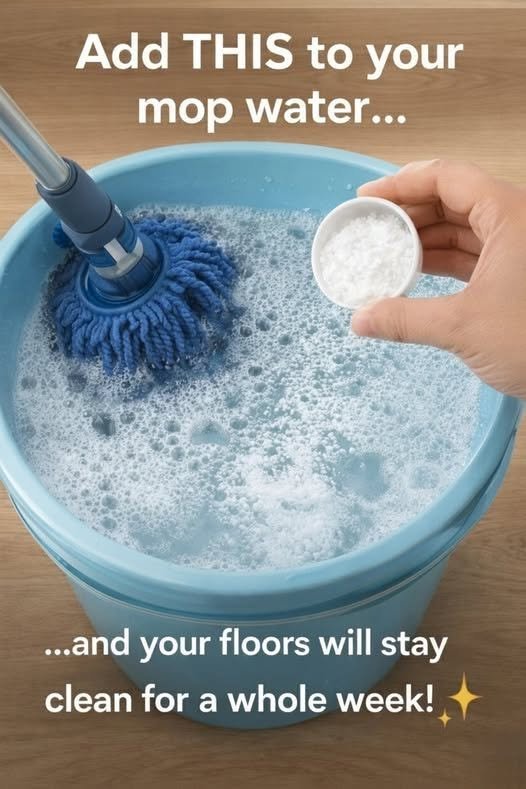
What the Viral “Floor Tricks” Usually Are (And Which Ones Work)
-
1. Hot Water + A Few Drops of Dish Soap + Rubbing Alcohol (Actually Works for Tile & Vinyl):
-
Why it works: Dawn-style dish soap cuts kitchen grease without heavy wax, while a splash of rubbing alcohol speeds evaporation so porcelain, ceramic, and vinyl floors dry streak-free without water spots.
-
Ratio: 1 gallon (4 liters) of warm/hot water + 2–3 drops of mild liquid dish soap + ¼ cup rubbing alcohol.
-
-
2. Fabric Softener or Hair Conditioner in Mop Water (Viral Myth — Skip It):
-
The claim: Makes floors smell amazing and repels dust.
-
The reality: Fabric softener leaves behind a waxy, silicone-like residue that traps dirt over time, dulls tile shine, and makes smooth floors dangerously slippery—especially for children, older adults, and pets.
-
-
3. White Vinegar + Water (Works Only on Specific Floors):
-
Where it works: Sealed ceramic/porcelain tile and linoleum (helps dissolve hard-water mineral haze).
-
Where it causes damage: Never use vinegar on natural stone (marble, travertine, granite, limestone—acid etches and permanently dulls the stone) or unsealed/waxed hardwood (strips protective finishes).
-
-
4. Dissolved Dishwasher Tablet in Mop Water (Works Only for Heavy Tile Grease):
-
The reality: Effective for heavily soiled garage or kitchen ceramic tiles because of alkaline degreasers, but requires a clean-water rinse afterward and is far too harsh for hardwood, laminate, or natural stone.
-
Safe, Streak-Free Mopping by Floor Type
-
Ceramic & Porcelain Tile: Warm water + 2–3 drops of dish soap (or a pH-neutral tile cleaner). Wring the microfiber mop well so dirty water doesn’t pool in grout lines.
-
Hardwood & Engineered Wood: Use only a dedicated pH-neutral wood floor cleaner and a barely damp microfiber flat mop—excess water swells wood planks and warps seams.
-
Natural Stone (Marble, Granite, Terrazzo): Use only a pH-neutral stone cleaner and warm water. Avoid vinegar, lemon juice, bleach, and abrasive powders.
-
Laminate & Luxury Vinyl Plank (LVP): Damp microfiber mop with warm water and a tiny drop of mild dish soap or manufacturer-approved LVP cleaner; never steam-mop laminate, as steam forces moisture into core boards.