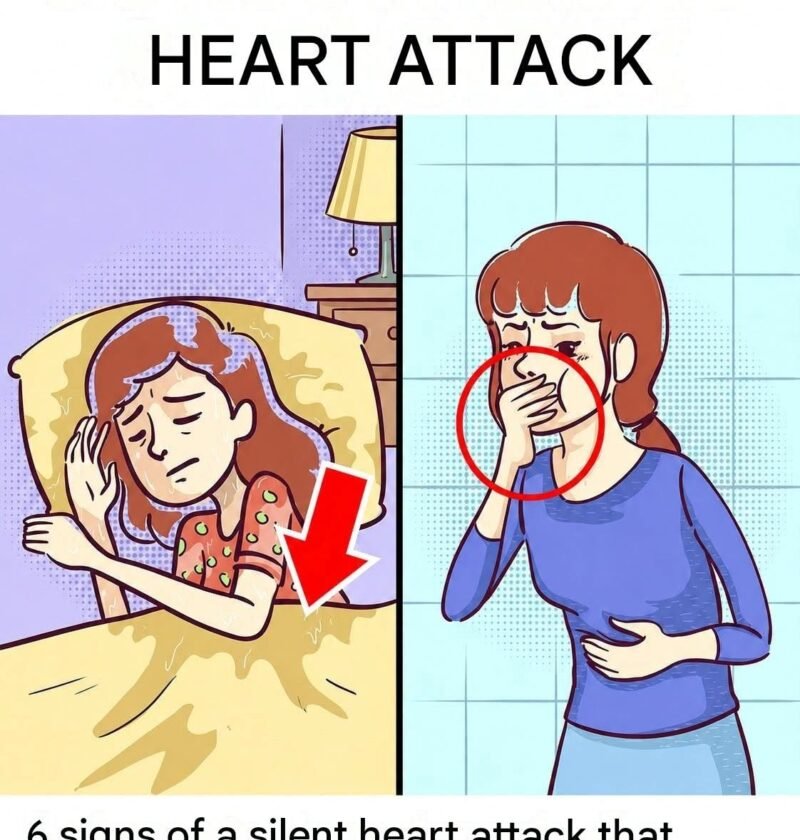
6 Overlooked Signs of a Silent Heart Attack
-
Mild, fleeting chest pressure or “heartburn”: Instead of severe pain, it often feels like mild fullness, tightness, squeezing, or stubborn indigestion in the center of the chest that comes and goes.
-
Unexplained shortness of breath: Feeling unusually winded while climbing a single flight of stairs, walking short distances, or even lying flat—without any chest pain at all.
-
Sudden, heavy fatigue: Overwhelming exhaustion or weakness that shows up abruptly during ordinary daily tasks (like making the bed or carrying light groceries) and doesn’t improve with rest.
-
Dull ache in the jaw, neck, upper back, or arms: Referred pain from the heart frequently shows up as a toothache-like jaw ache, tightness between the shoulder blades, or heaviness in one or both arms, easily blamed on muscle strain or sleeping awkwardly.
-
Cold sweats or clammy skin: Breaking out in a sudden sweat in a cool room or while sitting still, often accompanied by feeling pale or mildly unwell.
-
Nausea, lightheadedness, or sudden dizziness: Queasiness, burping, or feeling faint—frequently brushed off as a mild stomach bug, dehydration, or low blood pressure.
Who Has Higher Risk of a Silent Heart Attack?
-
People with diabetes: Long-term high blood sugar can blunt pain nerves (diabetic autonomic neuropathy), masking typical chest pain signals.
-
Older adults and women: More likely to experience fatigue, shortness of breath, nausea, or back/jaw discomfort rather than textbook chest pain.
-
People with high blood pressure, high cholesterol, smoking history, or strong family heart history.
What to Do If You Suspect These Symptoms
-
If symptoms are happening right now: Do not wait to see if they pass—call emergency services immediately (in Pakistan, dial 1122 for Rescue 1122) or have someone take you to the nearest emergency room.
-
If you noticed similar episodes recently: Schedule a prompt visit with a doctor for an electrocardiogram (ECG), troponin blood test (for recent events), or echocardiogram to check if your heart muscle experienced silent strain.