Drinks With Evidence for Supporting Blood Flow
-
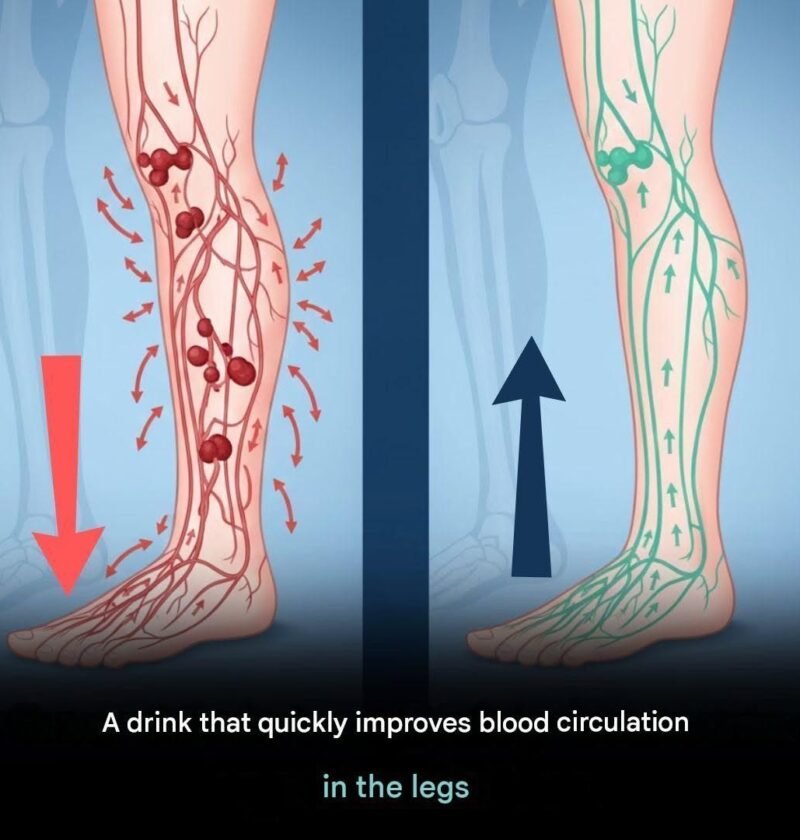
Beetroot juice (or blended whole beets): High in dietary nitrates, which your body converts into nitric oxide—a molecule that signals blood vessel walls to widen (vasodilation). Studies show nitric oxide levels peak roughly 2 to 3 hours after drinking beetroot juice, modestly improving blood flow and walking endurance in people with mild circulation limits.
-
Plain water: Mild dehydration thickens blood slightly and lowers blood volume, making sluggish circulation and leg heaviness worse. Staying well hydrated is the simplest immediate way to keep blood flowing smoothly.
-
Pomegranate juice (unsweetened, small serving): Packed with polyphenols that protect the inner blood vessel lining (endothelium) from oxidative stress and support nitric oxide activity. Stick to a small glass (about 120–150 mL) to avoid excess sugar.
-
Green tea or hibiscus tea: Green tea supplies catechins (such as EGCG) and hibiscus provides anthocyanins; both support healthy blood vessel relaxation and mild blood-pressure control over time.
-
Warm ginger or turmeric tea: Gingerols and curcumin support mild anti-inflammatory and vasodilating effects, though their immediate impact on leg circulation is gentler than dietary nitrates from beets.
What Actually Improves Leg Circulation Fast
-
Calf raises and ankle pumps: Doing 20–30 heel raises or flexing your feet up and down every hour activates your calf muscles (often called your “second heart”) to push pooled venous blood upward immediately.
-
A brisk 10-minute walk: Quickly boosts arterial inflow and venous return.
-
Elevating your legs: Resting with your feet propped above heart level for 15–20 minutes drains pooled fluid rapidly.
Important Safety Notes & When to See a Doctor
-
Medication interactions: Beetroot juice and hibiscus can lower blood pressure; pomegranate and green tea can interact with certain blood thinners (like warfarin) or blood-pressure drugs.
-
When to seek prompt medical care: Poor leg circulation can stem from peripheral artery disease (PAD) or chronic venous insufficiency. See a doctor if you have leg cramping when walking that stops with rest, cold or pale feet, slow-healing foot sores, or persistent ankle swelling. Seek immediate emergency care (in Pakistan, call 1122 for Rescue 1122) for sudden severe leg pain, coldness/numbness in one foot, or sudden swelling, redness, and warmth in one calf.