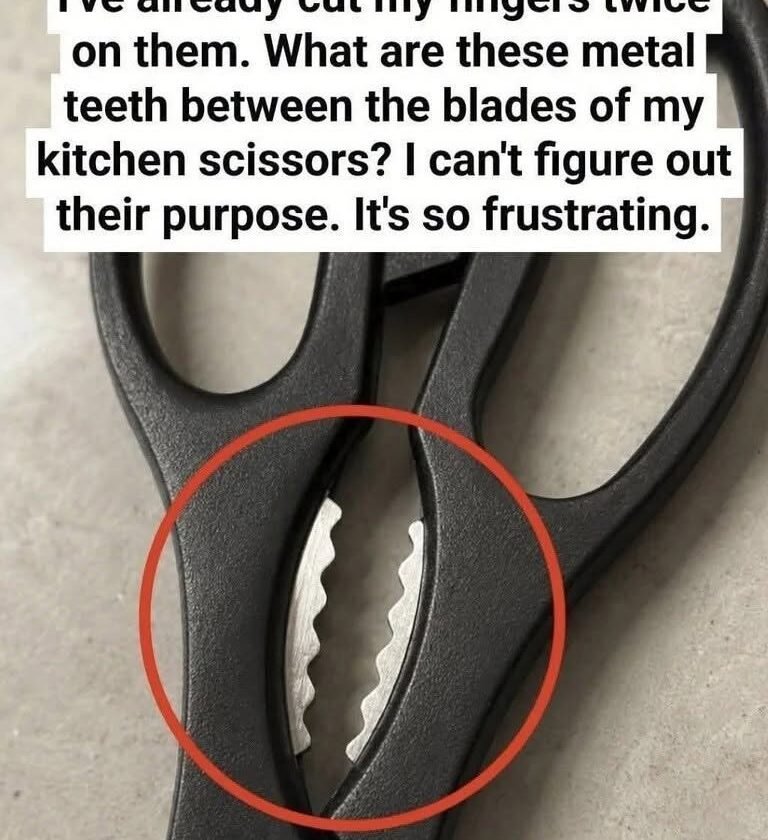
*   **What it actually is:** The serrated oval/teethed cutout between the handles (just below the pivot) is designed primarily as a **gripping/twisting aid**—specifically for cracking **nutshells** (like walnuts or hazelnuts), cracking **crab/lobster shells**, and gripping **stubborn bottle caps or small screw-top jars** for extra leverage.
*   **The "4 Brilliant Hacks" clickbait filler:** Usually pads out the list with obvious extensions of the same grip—opening twist-off soda/condiment caps, popping stubborn jar seals, cracking seeds/pits, or improvising as a lightweight garlic/herb crusher (though using heavy force on hard bones or metal lids can bend or snap the handles).

*   Start directly with the real engineering purpose in sentence 1.
*   Use concise bullets or a quick breakdown separating the intended design from the padded "hacks" and one practical safety note (don't over-torque cheap plastic handles).
*   Keep it snappy and free of fluff.That serrated, oval toothed cutout between the handles of kitchen shears is an **all-purpose gripping and cracking jaw**—engineered primarily to **crack nuts and shellfish (like walnuts, crab claws, or lobster shells) and grip stubborn screw-top bottle caps** using the leverage of the handles.
Intended Design vs. Padded “4 Brilliant Hacks”
-
Real Purpose #1 — Nutcracker & Shellfish Cracker: Placing a walnut, hazelnut, or crab leg inside the serrated teeth lets the ridges bite into the shell so it doesn’t slip while you squeeze the handles.
-
Real Purpose #2 — Bottle Cap & Small Lid Opener: Clamping the teeth around a stuck twist-off soda cap, hot-sauce lid, or nail-polish cap gives extra torque when wet hands can’t get traction.
-
Typical Clickbait “Hacks” (Minor Variations of the Same Grip):
-
Popping Vacuum-Sealed Jar Lids: Wedging the tip or handle edge under a metal jar rim to break the vacuum seal (works, though a spoon handle is safer on your wrists and blades).
-
Cracking Olive/Cherry Pits or Tough Stems: Using the jaw to split tough woody herb stems (like rosemary) or crack pits before pitting.
-
Crimping or Gripping Small Hardware/Tubes: Squeezing the last bit out of a metal paste tube or gripping a stubborn pull-tab.
-