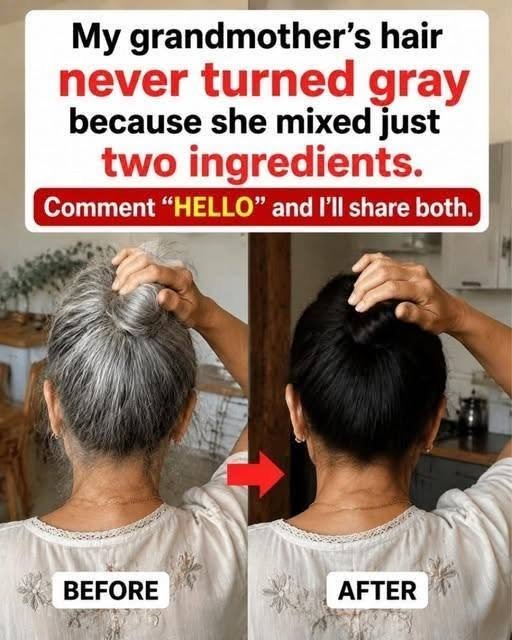
That is a classic nostalgia-driven beauty hook—combining a personal family story (“my grandmother’s hair never went gray”) with a simple 2-ingredient DIY formula. While traditional scalp oils and herbal rinses can genuinely improve hair shine, softness, and breakage resistance so hair grows longer without snapping, no topical 2-ingredient mixture can prevent or reverse gray hair.
What Those “2 Ingredients” Usually Are
Viral posts with this exact framing almost always feature one of a few common kitchen pairs:
-
Coconut oil + curry leaves (or fenugreek / black seeds / amla): Classic South Asian infusions simmered together and massaged into the scalp.
-
Castor oil + coconut or rosemary oil: Used to coat hair strands and reduce breakage.
-
Onion juice + coconut or olive oil: Marketed for shedding and thinning.
-
Black tea or coffee + oil/rinse: Used as a temporary dark stain on existing gray strands.
What They Actually Do vs. What Is Genetics
-
Why hair stays dark (or turns gray): Hair color comes from melanocytes (pigment cells) inside each hair follicle. When those cells slow down and stop producing melanin—driven overwhelmingly by genetics and age—hair grows out gray or white. Once a follicle stops making pigment, oil or kitchen herbs applied to the scalp cannot restart melanin production.
-
Why grandmother’s hair may have stayed dark: Some people simply inherit gene variants (such as variants in IRF4 and related pigment genes) that keep follicle pigment active into their 70s or 80s—long before any hair oil is applied.
-
Why the 2-ingredient method still helps hair look longer: Carrier oils (coconut, sesame, almond, olive) reduce protein loss from hair shafts, smooth the outer cuticle, and protect ends from friction and split ends. When hair breaks less, it retains length and looks thicker and healthier—even though its actual growth rate (~1–1.25 cm per month) and gray timeline remain unchanged.
Practical Safety Tips for DIY Scalp Mixes
-
Patch-test first: Natural ingredients—especially onion juice, undiluted essential oils (like rosemary or peppermint), and concentrated herbal extracts—can trigger contact dermatitis, redness, or shedding from scalp inflammation.
-
Don’t leave heavy oil on unwashed for days: Leaving thick oil on the scalp overnight or for multiple days can feed Malassezia yeast, worsening dandruff, itching, and follicle irritation—especially in older adults with sensitive scalps. Wash out gently after 30–60 minutes.
-
Rule out true medical causes of premature graying or thinning: If graying or hair loss happens rapidly at a young age, doctors check for Vitamin B12 deficiency, iron deficiency, thyroid disorders, or chronic stress, rather than relying on topical home remedies.