Why Common “3-Minute” Tricks Fail (or Backfire)
-
Lemon juice + baking soda or sugar: Lemon juice is highly acidic and contains furocoumarins, which react with sunlight (phytophotodermatitis) to cause chemical burns, blistering, and darker rebound hyperpigmentation on hands. Baking soda disrupts the skin’s protective acid mantle.
-
Apple cider vinegar or hydrogen peroxide: Both irritate and strip the top layer of skin without safely targeting melanin, often leaving hands red, dry, and more sun-sensitive.
-
Viral “3-minute peel” gels: Many quick-peel products use polymers that ball up into little flakes when rubbed—creating the illusion that dead pigmented skin is rolling off, when it is mostly just the product pilling up.
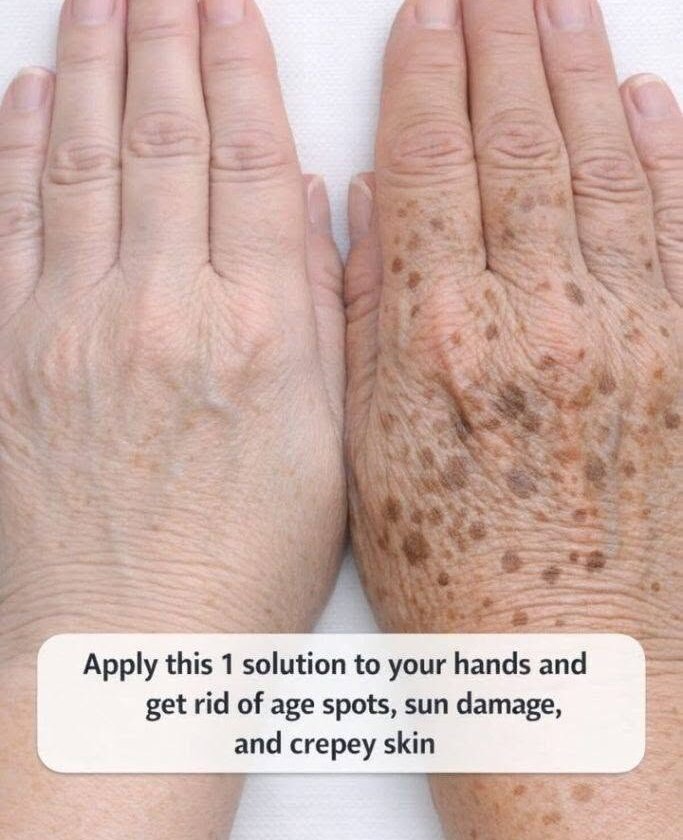
What Actually Fades Dark Spots on Hands
-
Daily broad-spectrum sunscreen (SPF 30+): The non-negotiable first step. Even a few minutes of unshielded sun reactivates melanocytes and undoes any brightening treatment. Keep a travel tube in your bag or car to reapply after handwashing.
-
Targeted brightening ingredients (4–12 weeks for visible results):
-
Vitamin C (L-ascorbic acid) or niacinamide in the morning to block excess pigment formation.
-
Retinol or glycolic/lactic acid hand creams at night to speed up skin cell turnover.
-
Azelaic acid, kojic acid, or tranexamic acid for stubborn spots.
-
-
In-office dermatology treatments (fastest real option): If you want rapid results, a dermatologist can clear age spots in 1 to 3 quick sessions using cryotherapy (freezing), IPL (intense pulsed light), or Q-switched lasers.