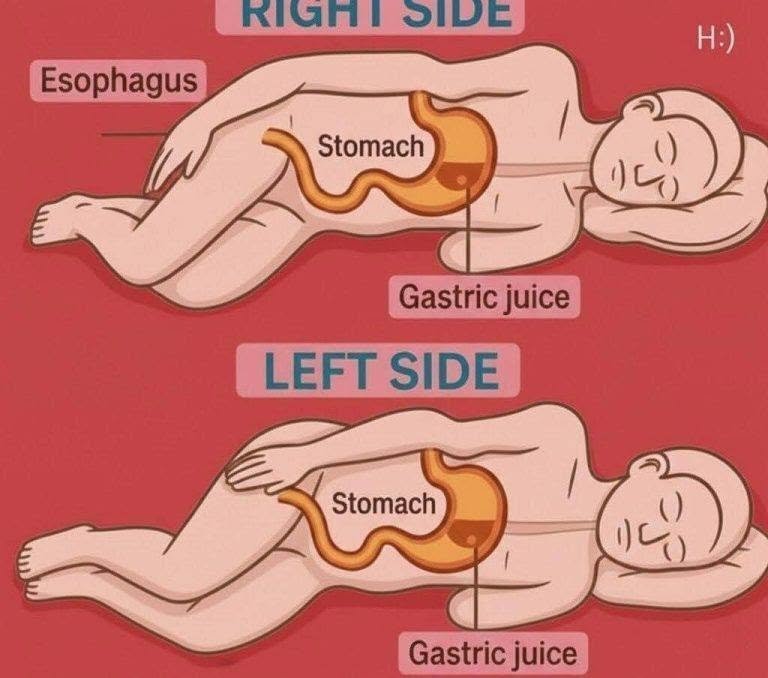
1. Sleep on Your Left Side (For Digestion, Heartburn & Circulation)
-
Why it works: Because of the natural anatomy of your stomach and esophagus, lying on your left side keeps the junction between them above the level of stomach acid, making it much harder for acid to splash upward. In pregnancy, left-side sleeping also prevents the uterus from pressing on the inferior vena cava, maximizing blood flow to the heart and fetus.
-
The simple tweak: Place a firm pillow between your knees to keep your hips stacked and prevent your upper leg from pulling your lower spine out of alignment.
2. Sleep on Your Back with Knee Support (For Neck & Lower Back Pain)
-
Why it works: Keeping the head, neck, and spine aligned in a neutral line relieves tension in spinal discs and facet joints.
-
The simple tweak: Slide a medium pillow or rolled-up towel directly underneath your knees. This slightly bends your legs, flattens the curve of your lumbar spine against the mattress, and immediately takes tension off your lower back muscles. Use a thinner pillow under your head so your chin isn’t pushed forward toward your chest.
3. Ditch the Stomach-Sleeping Habit (Or Modify It)
-
The simple tweak: If you can’t fall asleep any other way, transition gradually by hugging a thick body pillow while lying halfway on your side. If you remain on your stomach, place a flat pillow under your pelvis and lower abdomen to take pressure off your lower spine, and use an ultra-thin pillow (or no pillow) under your head.
4. Elevate Your Upper Body Slightly (For Snoring & Sinus Congestion)
-
The simple tweak: Instead of stacking two regular pillows (which only bends your neck forward and can actually worsen airway restriction), use a foam wedge pillow or raise the head of your bed by 4 to 6 inches so your entire torso inclines gently from the waist up.
Quick Guide: Matching Position to Your Goal
| If You Struggle With… | Try This Position | Key Pillow Adjustment |
| Acid reflux / heartburn | Left side | Pillow between the knees |
| Lower back pain | Flat on back (or side) | Pillow under the knees (or between knees if on side) |
| Snoring / congestion | Side or slightly elevated back | 4–6 inch torso wedge pillow (avoid neck-bending stacks) |
| Shoulder or hip pain | Opposite side or back | Body pillow to hug so your top arm and hip stay supported |