Why the Stem Trick Works—and Why “10 Days Longer” Is Overstated
-
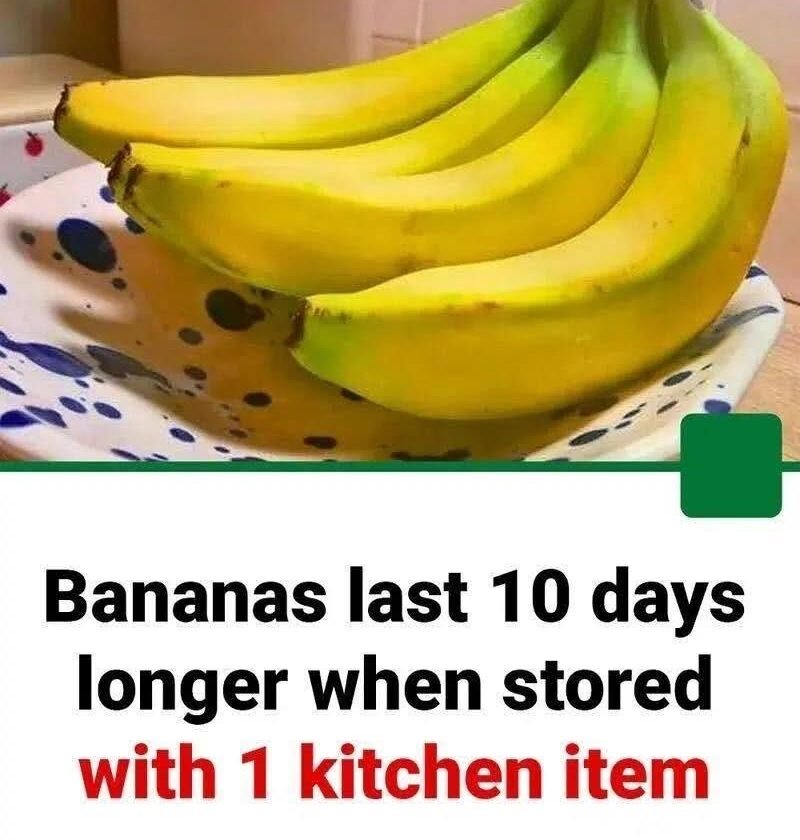
How it helps: Bananas are climacteric fruits that produce ethylene gas, a natural plant hormone that triggers softening, starch-to-sugar conversion, and browning. A big share of that gas escapes through the stem/crown. Tightly wrapping the stems with plastic wrap or foil creates a modest barrier that slows gas release and delays overripening somewhat.
-
Why a fruit bowl speeds things up: A crowded fruit bowl traps ethylene around the bananas—and if other ethylene-releasing fruits (like apples, pears, avocados, or ripe tomatoes) sit beside them, ripening accelerates even faster. Sitting at the bottom of a bowl also causes pressure bruises that turn brown quickly.
-
Why 10 extra days is a stretch: Wrapping the stems doesn’t stop ripening completely. Warm kitchen temperatures, direct sunlight, bananas that were already fairly ripe when bought, or unwrapping and rewrapping the stems repeatedly will speed things right back up.
Practical Ways to Make Bananas Last Longer
-
Separate bananas from other fruit: Keep them out of a shared fruit bowl—especially away from apples, avocados, tomatoes, and stone fruits—and give them space so they don’t bruise.
-
Wrap the stems snugly (and peel back only what you eat): Wrap the top stems tightly with plastic wrap or foil; if you peel off one banana, re-wrap the remaining stems rather than leaving them wide open.
-
Hang them or lay them on a soft surface: Hanging bananas on a banana hook (or placing them on a folded cloth/towel rather than hard or hot counters) helps prevent bruising and keeps air moving around them.
-
Use the fridge strategically once ripe: Once bananas reach your preferred ripeness (yellow with little or no green), moving them to the refrigerator slows further softening for several days—the peel will turn dark brown or black, which looks alarming, though the fruit inside stays firm and edible longer. (Avoid refrigerating very green bananas, as cold temperatures can disrupt normal ripening.)