Common Factors Behind Nighttime Leg Cramps
-
Muscle fatigue & prolonged sitting or standing: Overworking leg muscles during exercise or standing on hard surfaces—or sitting for hours during the day—can leave motor nerves and muscle fibers prone to misfiring at night.
-
Foot position & shortened calf fibers during sleep: Sleeping on your stomach or with toes pointed downward keeps calf muscles in a shortened position, making a sudden contraction more likely if you stretch in your sleep.
-
Fluid & electrolyte shifts (or heavy sweating): Mild dehydration, fluid loss, or shifts in potassium, magnesium, or calcium can affect nerve-muscle signaling—though routine magnesium or electrolyte pills often have modest or mixed results unless you have a documented low level or specific deficiency.
-
Medications: Several commonly prescribed drugs are linked to leg cramps in some people, including diuretics (“water pills”), statins, certain blood pressure or asthma medications, and some osteoporosis or neurological drugs. Never stop a prescribed medication on your own, but it is worth reviewing your list with a doctor or pharmacist.
-
Pregnancy & aging: Nighttime cramps are very common in the second and third trimesters of pregnancy and become more frequent with age, as motor neurons and muscle fibers gradually change.
-
Underlying medical conditions: Less often, frequent cramps tie into peripheral neuropathy (nerve irritation, often related to diabetes), peripheral artery disease (poor circulation), thyroid disorders, kidney or liver disease, or spinal nerve compression (such as lumbar stenosis).
Practical Ways to Relieve and Prevent Them
| Moment | What to Do | Why It Helps |
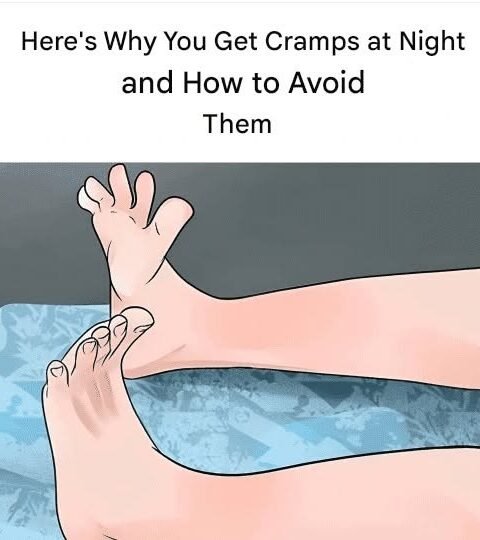
| When a cramp hits | Gently straighten the leg and flex the foot/toes upward toward your shin; stand and put weight on the leg if safe, or gently massage/apply warmth | Lengthens the contracted calf muscle and interrupts the spasm cycle |
| Before bed | Do gentle calf stretches (such as a wall stretch with your back heel down) for a minute or two; keep blankets loose around your feet | Helps keep resting calf fibers from locking into a shortened position |
| During the day | Stay reasonably hydrated, take movement breaks from long sitting, and wear supportive footwear | Reduces daytime muscle strain and stiffness |
| Medical review | Bring your medication list and symptoms to a clinician if cramps are frequent or disruptive | Helps rule out reversible drug effects, circulation/nerve issues, or lab abnormalities |