Everyday Causes (The Most Common Culprits)
-
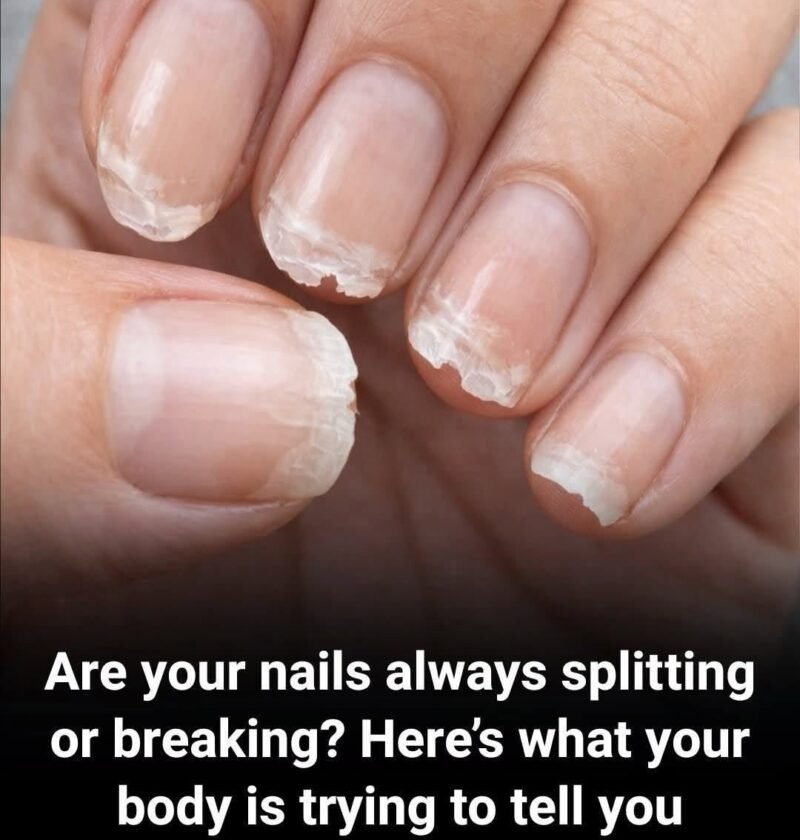
Repeated wetting and drying: Frequent handwashing, dishwashing, or swimming causes the nail plate to swell with water and shrink as it dries. Over time, those tiny expansion-contraction cycles weaken bonds between keratin layers and cause peeling.
-
Harsh solvents and cosmetics: Frequent acetone nail polish remover, gel/acrylic enhancements and removals, harsh soaps, and household cleaners strip protective lipids and thin the nail plate.
-
Dry air and mechanical trauma: Cold or dry indoor air, using nails as tools (to pry, scratch, or open tabs), or aggressive filing/buffing makes brittle nails chip and snag easily.
Internal Clues & Medical Possibilities
-
Iron deficiency (and spoon nails): Low iron stores—with or without full anemia—can contribute to brittle, thin, or ridged nails. In more pronounced cases, nails can flatten or curve upward into a concave “spoon-shaped dent” called koilonychia (often accompanied by fatigue, pale inner eyelids, or shortness of breath).
-
Thyroid imbalances: An underactive thyroid (hypothyroidism) slows cellular turnover and metabolism, sometimes leading to dry, brittle, or slow-growing nails alongside fatigue, cold sensitivity, or dry skin.
-
Nutritional gaps & skin conditions: Low overall protein/calorie intake or deficiencies (such as zinc or B vitamins) can play a role when diet is restricted, though high-dose supplements rarely help unless a deficiency exists. Nail psoriasis or fungal infections can also make nails crumbly, thickened, or discolored.
| Pattern / Clue | What It Often Points To | Practical Next Step |
| Peeling tips, worse after dishwashing or polish | Repeated water exposure, solvents, or dry air | Wear gloves for chores, switch to gentle/non-acetone removal, moisturize daily |
| Thin/brittle nails + fatigue or pale skin | Possible iron deficiency or anemia | Ask a doctor about checking iron/ferritin and a complete blood count (CBC) |
| Brittle nails + cold intolerance or sluggishness | Possible thyroid imbalance | Discuss thyroid function testing (such as TSH) with a clinician |
| Crumbly, thick, or lifted nails | Nail fungus, psoriasis, or repeated trauma | Have a doctor or dermatologist examine the nail before treating |
Practical Care That Actually Helps
-
Protect hands from water and chemicals: Wear cotton-lined rubber or nitrile gloves when washing dishes or cleaning, and avoid soaking hands for long stretches.
-
Moisturize the nail plate and cuticles: Apply plain ointment or thick cream (such as petrolatum, ceramide cream, or jojoba/mineral oil) to bare nails and cuticles—especially right after washing hands and before bed.
-
Keep nails short and smooth: Trim nails straight across and gently round the edges with a fine file rather than clipping deep into corners or using nails as tools.
-
Go easy on salon treatments: Take breaks between gel/acrylics, avoid peeling off enhancements or polish, and opt for acetone-free remover when possible.