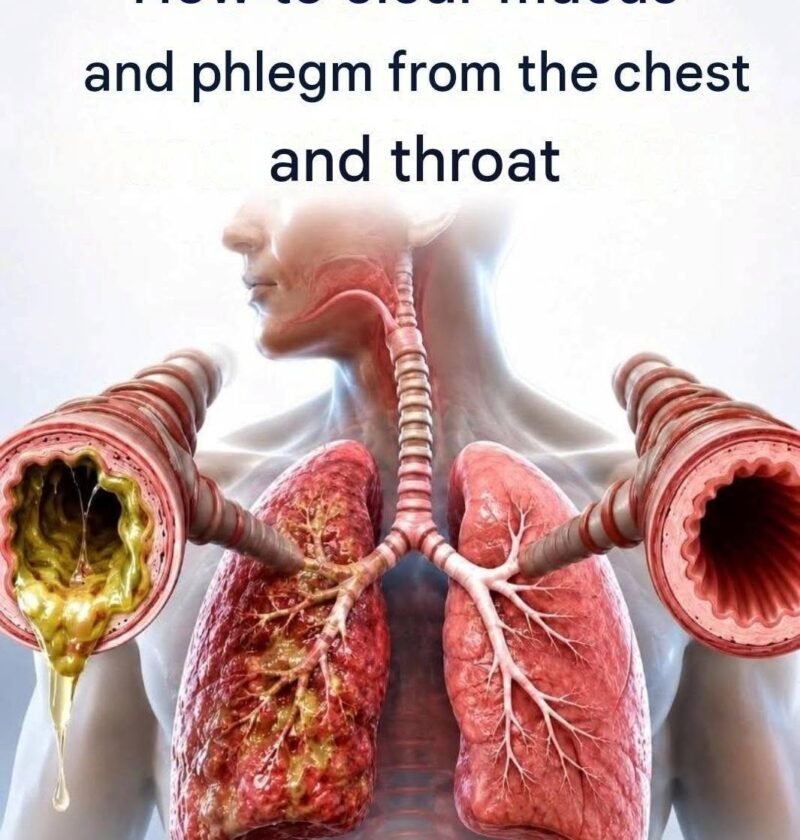
Clearing persistent mucus in the chest and throat is less about “drying it up” with a random pill and more about changing the viscosity and flow of the mucus so your body can naturally clear it out.
Mucus (phlegm) is actually your respiratory system’s frontline defense mechanism. When your airways or throat get irritated by smoke, allergies, viral infections, or acid reflux, goblet cells and submucosal glands pump out thick mucus to trap irritants. The problem arises when that mucus becomes too thick and sticky to cough or swallow easily.
Step 1: Thin the Mucus First (Hydration & Warmth)
Thick, sticky mucus clings stubbornly to your bronchial tubes and throat walls. You have to thin it out before your body can move it.
-
Aggressive Hydration (Warm Fluids): Drink plenty of water throughout the day. Warm water, herbal teas, and clear broths do double duty—they provide systemic hydration and the warm steam directly thins mucus on contact as you swallow or breathe it in.
-
Over-the-Counter Mucus Thinners (Guaifenesin): Medications containing guaifenesin (such as Mucinex) are expectorants. They do not dry up mucus; instead, they increase the water content in respiratory secretions, making mucus thinner, looser, and significantly easier to cough up. Crucial rule: Drink a full glass of water with each dose, or guaifenesin cannot work.
-
Avoid Dehydrating Traps: Temporarily cut back on heavy dairy, excessive caffeine, and alcohol if you are in the middle of a heavy congestion flare-up—while dairy doesn’t create mucus, it can temporarily coat the throat and make existing mucus feel thicker and more bothersome.
Step 2: Physically Clear the Chest (Airway Clearance)
If mucus is trapped deep in your chest (bronchial tubes), drinking water isn’t enough; you need mechanical assistance to move it upward against gravity.
-
Steam Inhalation & Hot Showers: Take a steamy 15-minute shower, or lean over a bowl of hot water with a towel draped over your head and breathe deeply through your nose and mouth. The warm moisture penetrates deep into the lower airways.
-
Controlled Coughing (The “Huff Cough”): Instead of violent, hacking coughing fits (which irritate throat tissues and cause exhaustion), take a slow breath in, hold it for 2 seconds, and make a “huff” sound (like fogging up a mirror) while pushing air out using your stomach muscles. This moves mucus up from small airways without collapsing them.
-
Percussion / Postural Drainage (For Severe Chest Congestion): If mucus is severe, gently cupping your hand and clapping on your upper back and chest (while leaning slightly forward) helps physically dislodge thick phlegm from lung walls so you can cough it out.
Step 3: Clear and Soothe the Throat
If your main complaint is a persistent, sticky “post-nasal drip” or lump-in-the-throat feeling, the issue is usually mucus dripping down from your sinuses or being pushed up by throat irritation.
-
Warm Salt Water Gargle: Mix 1/2 teaspoon of salt in 8 ounces of warm water. Gargle at the back of your throat for 20 seconds and spit it out. This draws out excess fluid from swollen throat tissues, washes away trapped mucus, and kills local bacteria.
-
Saline Nasal Rinses (Neti Pot / Saline Spray): If post-nasal drip is fueling your throat mucus, flushing your nasal passages with sterile or distilled saline clears the source before it ever drips down into your throat.
-
Address Silent Acid Reflux (LPR): Stomach acid frequently creeps up into the throat overnight without causing classic heartburn, triggering a protective reflex where your throat produces thick, gluey mucus. Elevating the head of your bed 6 inches and avoiding eating 3 hours before sleep often stops this cycle entirely.
Red Flags: When Mucus Needs Medical Care
Most chest and throat mucus resolves within 1 to 2 weeks as a cold or allergy clears. See a doctor promptly if:
-
Your phlegm turns green, rust-colored, dark brown, or is streaked with bright blood.
-
You develop a high fever, chills, or sharp chest pain when breathing in.
-
You experience shortness of breath or audible wheezing.
-
The congestion lasts longer than 3 weeks without improvement.