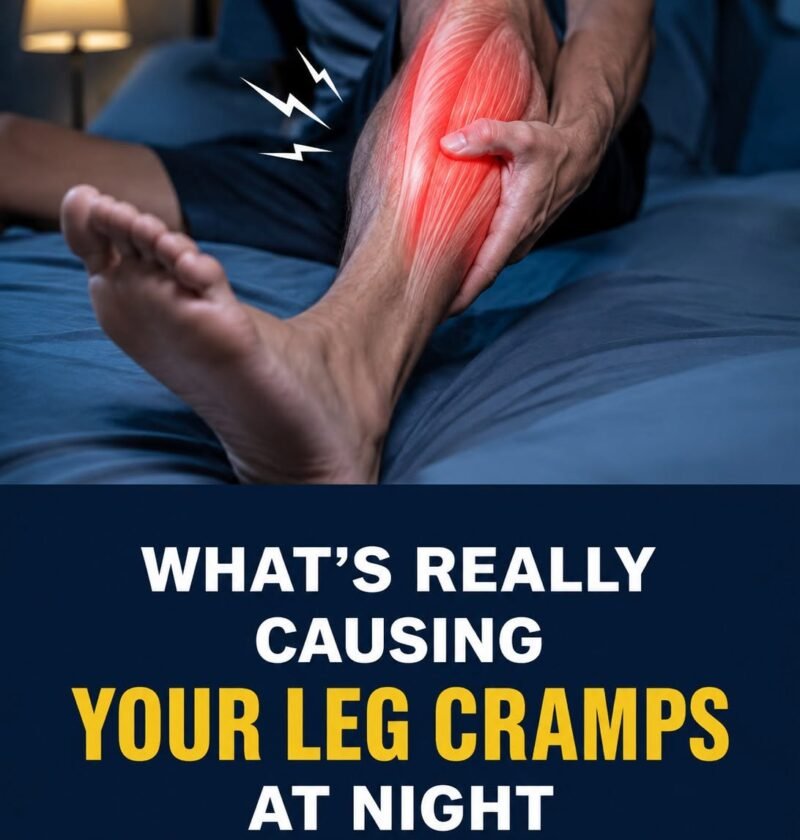
Nighttime leg cramps—sudden, painful, involuntary contractions of the calf muscles (or sometimes the feet and thighs) that strike right as you are falling asleep or waking up—are a remarkably common and intensely frustrating problem.
For years, viral health posts have claimed that nighttime cramps simply mean you are low on potassium or need to eat a banana. While hydration and electrolytes play a supporting role, the clinical reality of nocturnal leg cramps is far more nuanced.
Why Do Leg Cramps Happen at Night? (The Real Causes)
Most nighttime cramps are classified medically as idiopathic nocturnal leg cramps, meaning they happen without a single, easily identifiable disease. Instead, they are typically triggered by a combination of muscle fatigue and nerve over-excitation:
-
Nerve Over-Firing (Motor Neuron Hyperexcitability): The root cause isn’t actually inside the muscle fiber itself; it happens in the motor neurons that control the muscle. When these nerves become overly sensitive, they fire rapid, chaotic electrical signals that force the muscle into a violent, sustained spasm.
-
Prolonged Muscle Shortening in Bed: If you sleep with your toes pointed downward (plantarflexion), your calf muscles remain in a shortened position for hours. In this shortened state, even a tiny movement or stretch can trigger an over-reaction from the muscle spindles, sparking a painful cramp.
-
Extreme Weather & Temperature Shifts: Cramps often spike during hot summer months or cold winter nights. Heat causes fluid and electrolyte loss through mild sweating, while cold temperatures can alter blood circulation and muscle responsiveness.
-
Underlying Medical Triggers & Medications: While most cramps are harmless, frequent nocturnal cramps can be secondary to:
-
Medications: Diuretics (“water pills”), statins (cholesterol-lowering drugs), blood pressure medications, and IV iron infusions.
-
Metabolic Conditions: Type 2 diabetes, thyroid disorders, chronic kidney disease, or peripheral neuropathy.
-
Structural Issues: Flat feet, tight calves, or prolonged standing on hard concrete floors during the day.
-
What Doesn’t Work (Clearing Up the Myths)
-
The Quinine Myth: For decades, doctors prescribed quinine for nighttime cramps. Clinical safety boards now strongly advise against quinine because it carries severe, life-threatening risks—including dangerous heart rhythm changes, low platelets (thrombosis), and severe allergic reactions.
-
The “Bananas Fix Everything” Myth: While potassium deficiency can cause muscle cramps, it is almost never the sole culprit behind nighttime leg cramps unless you are severely dehydrated or taking strong diuretic medications. Eating endless bananas rarely cures chronic night cramps on its own.
Evidence-Based Prevention: What Actually Works
When lifestyle habits and targeted care are adjusted, the frequency and severity of nighttime cramps drop dramatically:
1. Daily Calf-Stretching Routine
The single most effective preventative intervention is lengthening the calf muscles before bed.
-
The Wall Stretch: Stand facing a wall, place your hands on the wall, and step your cramping leg backward with your heel flat on the floor. Lean forward until you feel a gentle stretch in the calf. Hold for 30 seconds, repeat 3 times per leg right before getting into bed.
2. Strategic Hydration & Electrolytes
-
Drink adequate fluids throughout the day—not just right before bed (which only leads to waking up for nighttime bathroom trips).
-
If you exercise heavily or sweat a lot, ensure a balanced intake of magnesium, sodium, and potassium from foods like leafy greens, nuts, seeds, avocados, and yogurt.
3. Adjusting Your Sleep Position
-
Avoid sleeping with heavy bedsheets tucked tightly at the foot of the bed, which forces your toes downward.
-
Sleep on your side or back with a pillow positioned so your feet hang off the edge of the mattress naturally, or keep your ankles at a neutral 90-degree angle.
4. Therapeutic Magnesium Supplementation
-
For frequent, stubborn night cramps, clinical trials show that magnesium glycinate or magnesium citrate (200–300 mg taken in the evening) safely reduces cramp frequency and intensity for many adults by calming neuromuscular irritability. (Always check with your doctor if you have kidney issues.)
How to Stop a Cramp the Moment It Hits
When a cramp wakes you up in agony, do not try to “massage through it” aggressively—that causes micro-tears in the muscle fibers. Instead, use active lengthening:
-
Immediate Dorsiflexion: Straighten your leg and pull your toes upward toward your shin (or push your heel away from you). If you can reach your toes, pull them back gently. If you are standing, press your weight down flat onto your heel on a cool floor.
-
Gentle Walking: Once the severe spasm eases, taking a slow, gentle walk around the room encourages blood flow and resets the muscle spindles.
-
Warmth or Cold: Apply a warm heating pad or take a warm shower to relax the lingering muscle tightness, or use a cool pack if there is sharp residual soreness.
When to See a Doctor: Consult your physician if your leg cramps are severe, happen every single night, are accompanied by significant leg swelling, redness, or weakness, or started shortly after beginning a new prescription medication.