If you are a dedicated right-side sleeper, your body experiences a few distinct physiological effects due to human anatomy and gravity. While side sleeping overall is fantastic for keeping your airway open and reducing snoring compared to sleeping flat on your back, switching sides can make a noticeable difference depending on how your body handles digestion and circulation.
Here is what you should keep in mind if you always lean toward the right:
1. The Acid Reflux Connection (Why the Left Side Gets the Spotlight)
The most well-documented drawback to right-side sleeping involves gastrointestinal health.
-
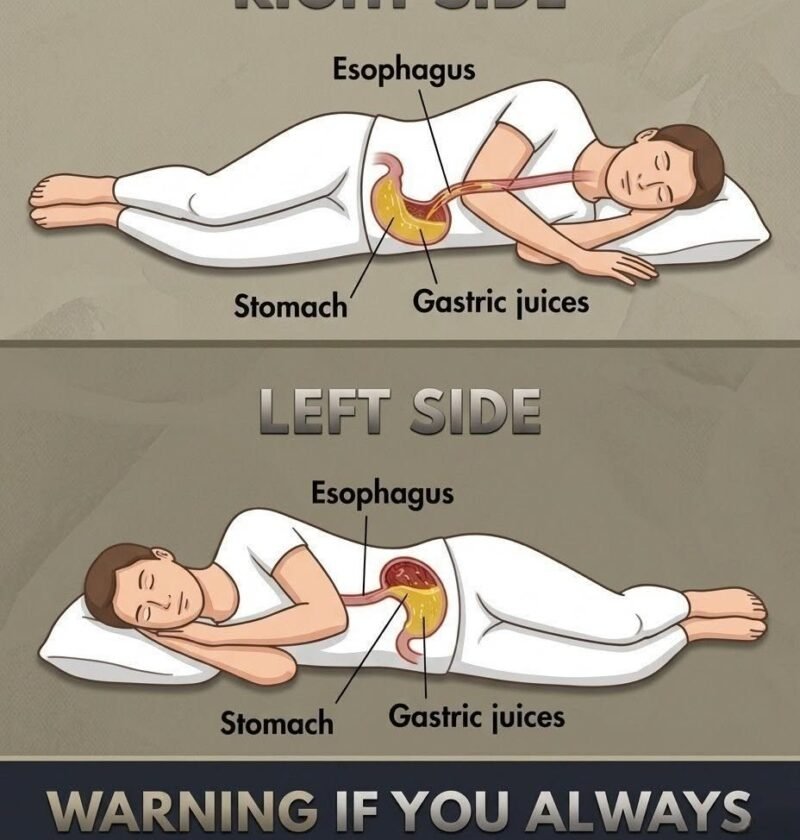
The Anatomy: Because of how your stomach is shaped and positioned, your stomach sits slightly to the left and curves upward. The junction where your esophagus meets your stomach sits just above the gastric acid level when you lie on your left side, using gravity to keep acid down.
-
The Right-Side Effect: When you sleep on your right side, gravity shifts stomach contents closer to or above that muscular valve (the lower esophageal sphincter). If you are prone to GERD, heartburn, or ate a heavy meal late at night, right-side sleeping makes it much easier for stomach acid to slip upward, triggering a midnight or morning burn.
2. Digestion and Transit Time
Your colon loops through your abdomen, traveling up the right side, across the top, and down the left side before reaching the exit.
-
Proponents of left-side sleeping note that gravity naturally assists waste movement along the descending colon toward the left. Sleeping strictly on the right side doesn’t block digestion entirely—since your digestive tract uses muscular contractions (peristalsis) to move food—but it lacks that same gravitational assistance for the final stretch.
3. Are There Any Perks to the Right Side?
Yes! For certain individuals, right-side sleeping is actually preferred:
-
Heart Comfort: Because the heart sits slightly toward the left side of your chest, sleeping on your right side prevents the heart from shifting or feeling gravity’s pull against the chest wall, which some people with specific cardiac conditions find more comfortable.
-
Pregnancy Note: While pregnant women are strongly advised to sleep on their left side to keep the growing uterus from pressing on the major vena cava vein (which ensures optimal blood flow to the baby), shifting briefly or alternating isn’t harmful if monitored.
The Bottom Line
If you wake up feeling great, digestion is smooth, and you don’t suffer from heartburn, your preferred sleep position is working just fine for you. However, if you frequently wake up with a sour taste in your mouth, a dry throat, or nighttime indigestion, simply rolling over to your left side can offer an immediate, drug-free fix.