…clickbait food and cooking headlines love to use breathless, dramatic hooks like “The toxic black line in your shrimp that 99% of people eat without knowing—what it really is will shock you!” to make you grossed out by seafood and terrified of your next dinner.
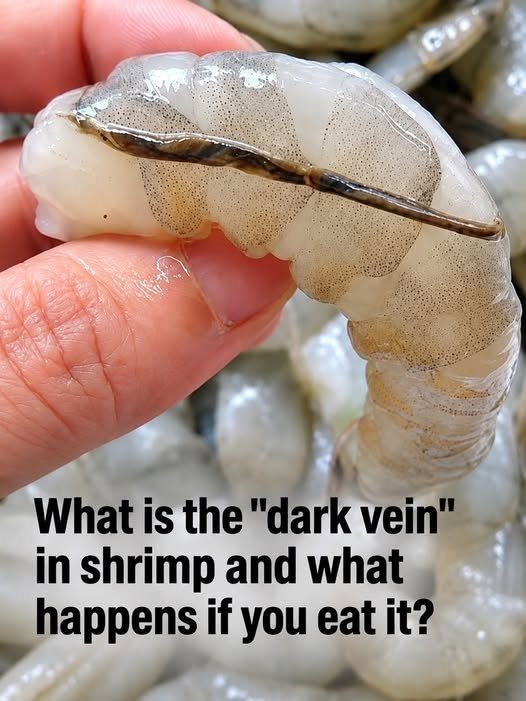
While nobody wants to bite into grit, the unvarnished culinary and biological reality is much more grounded: that dark line running along the back of a shrimp isn’t a toxic poison; it’s simply the shrimp’s digestive tract (its intestine), filled with digested food particles and sand.
While eating it won’t kill you or poison your body, chefs and home cooks routinely devein shrimp for aesthetic and textural reasons. Let’s look at what the shrimp vein actually is and whether you always need to bother removing it.
What Is the Shrimp “Vein”?
Biologically speaking, shrimp are crustaceans (close relatives of crabs and lobsters).
-
The Anatomy: The dark line is the dorsal intestine, which runs along the upper curve of the shrimp’s body. Depending on what the shrimp was recently eating (such as algae, sand, or microscopic bits of organic matter), the vein can appear clear, grey, brown, or black.
-
Is it dangerous? No. When shrimp are thoroughly cooked, any bacteria present in the digestive tract are destroyed by heat. Millions of people eat un-deveined shrimp around the world every day without getting sick.
Why Do People Devein Shrimp?
If it isn’t toxic, why do recipes constantly call for deveining? It comes down to two main factors:
1. Texture and Grittiness
-
The reason: Because shrimp feed along the ocean floor, their digestive tracts sometimes contain tiny particles of sand or mud. If left intact, biting into a bit of grit can ruin an otherwise perfect dish.
2. Appearance and Flavor
-
The reason: Visually, removing the dark line gives cooked shrimp a clean, pink, appetizing appearance. Additionally, in larger shrimp (like prawns or jumbo tiger shrimp), a full intestine can sometimes impart a slightly bitter, muddy, or metallic taste to the meat.
Do You Always Need to Devein Shrimp?
Not necessarily. Whether you should bother depends entirely on the size of the shrimp and how you are cooking them:
-
Small Shrimp / Salad Shrimp: For tiny cocktail or salad shrimp, deveining is nearly impossible and entirely unnecessary; the vein is so microscopic you won’t notice it at all.
-
Jumbo Shrimp / Prawns: For large or jumbo shrimp, deveining is recommended because the digestive tract is much larger, more noticeable, and more likely to contain grit or bitterness.
The Bottom Line
You don’t need to panic if you accidentally eat a shrimp that wasn’t deveined—it’s just a natural part of the animal’s digestive system. But for larger shrimp, taking 30 seconds to slice down the back and pull it out makes for a much cleaner, more pleasant meal.