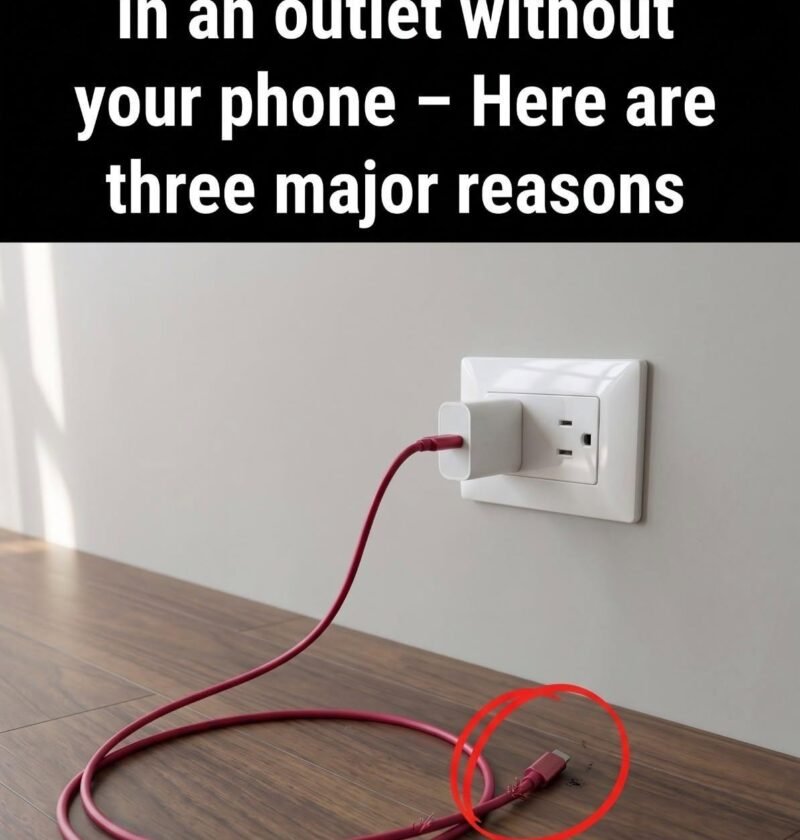
Leaving a phone charger plugged into a wall outlet when your phone isn’t attached is an everyday habit for millions of people. While high-quality, certified chargers are engineered with safety protections, leaving them plugged in indefinitely introduces a few subtle downsides and risks.
1. The Fire Hazard (The Biggest Concern)
Even when no phone is attached, a plugged-in charger remains under constant electrical voltage.
-
The Danger of Surges: Local power grids experience micro-surges, lightning strikes, or sudden voltage spikes. Over time, these surges degrade the microscopic internal components (like capacitors) inside the adapter.
-
Counterfeit or Cheap Chargers: Uncertified, knock-off, or damaged chargers often lack proper thermal insulation or circuit protection. If a cheap internal component fails while the charger is unattended, it can overheat rapidly, melt, smoke, or spark a fire.
2. “Vampire Power” (Energy Waste)
A charger left in an empty outlet still draws a tiny amount of electricity known as standby or “vampire” power because its internal transformer remains active, converting alternating current (AC) to direct current (DC) and losing a fraction of that energy as heat.
-
The Cost: For a single modern, original manufacturer charger, this draw is minuscule—often less than 0.3 watts—amounting to just pennies a year. However, if you multiply that across multiple rooms, older adapters, and other idle electronics, the cumulative waste adds up over time.
3. Shortened Charger Lifespan
Because a plugged-in charger continuously handles a low-level electrical load and is perpetually exposed to small fluctuations from the grid, its internal parts age faster. Constantly keeping a power brick “warm” or under electrical stress shortens its overall lifespan, causing it to fail sooner than it would if only plugged in when actively in use.
4. Safety Risks for Pets and Children
Dangling cords or exposed USB ports plugged directly into low wall outlets can attract curious toddlers or pets. If a pet chews on a live cord—even one not currently attached to a phone—the combination of saliva and active electricity can cause a severe shock or mouth burn.
How to Tell If Your Setup Is at Risk
-
The Touch Test: Walk up to a charger that has been plugged in empty for a few hours. If it feels warm or hot to the touch, unplug it immediately. A healthy, idle charger should always remain at room temperature.
-
The Sound Test: If your charger emits a faint high-pitched squeal or whining noise (known as coil whine) while empty, its internal regulator is struggling and it should be replaced.