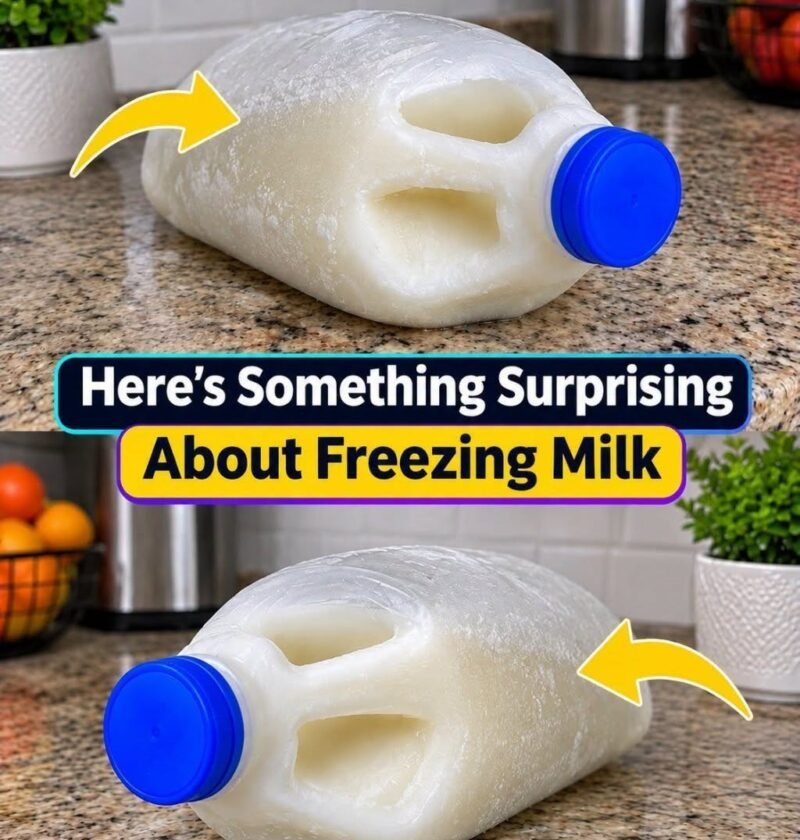
Freezing milk is one of those ultimate kitchen hacks that sounds like a great idea until you open the jug later and wonder why it looks like a weird, separated science experiment.
Here is what actually happens when you freeze milk—and the rules you need to know so you don’t ruin a gallon.
What Happens When Milk Freezes?
-
The Separation (The “Grainy” Texture): Milk is an emulsion—a delicate suspension of water, fats, proteins, and sugars. When milk freezes, the water expands into ice crystals, pushing the fats and proteins (casein) together. When it thaws, those fats don’t smoothly reintegrate on their own. The result? Milk that looks slightly watery with tiny, floating buttery flakes or a grainy texture.
-
The Expansion Risk: Just like water, milk expands as it freezes. If you try to freeze a glass bottle or a tightly filled, rigid plastic jug right up to the brim, it will burst or crack open in your freezer.
Golden Rules for Freezing Milk Successfully
-
Pour Out a Little First: If you’re freezing a store-bought plastic jug, pour out about an inch of milk to give it room to expand as it turns to ice.
-
Use It Fresh: Freeze milk before its expiration date, not when it’s already starting to turn.
-
Thaw It in the Fridge: Move the frozen jug into the refrigerator 24 to 48 hours before you need it. Never thaw milk on the counter at room temperature, as bacteria can multiply rapidly in the danger zone.
-
Shake Vigorously: Once fully thawed, give the jug a heavy shake to help blend the separated fats back into the liquid. Even then, thawed milk is best reserved for cooking, baking, smoothies, or oatmeal rather than drinking by the glass, where the texture change is most noticeable.