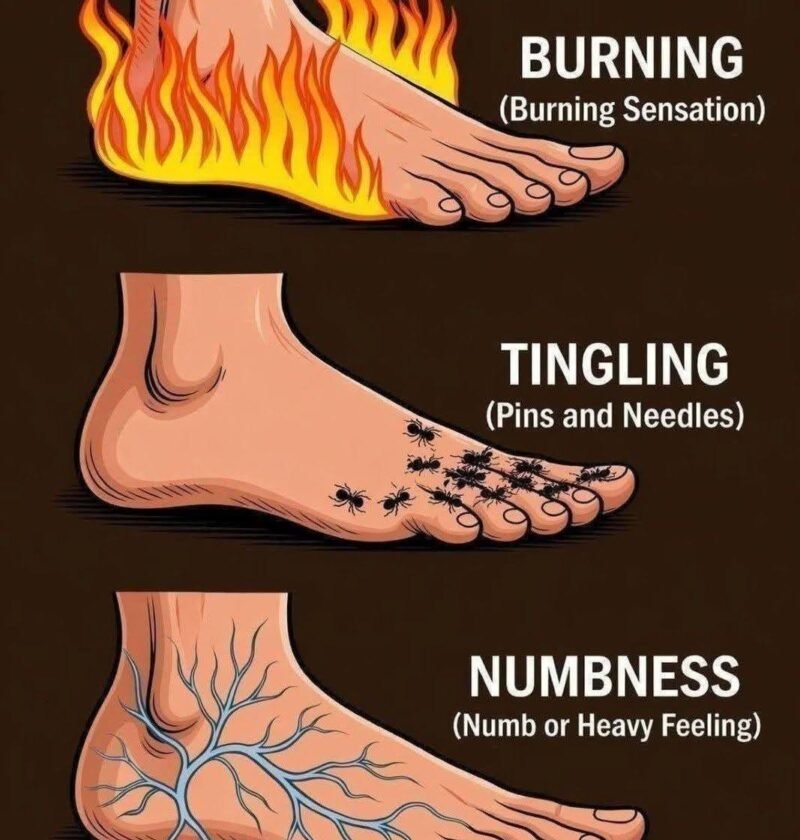
Our feet often act as an early warning system for our overall health, revealing subtle signs of circulation problems, nerve damage, nutritional gaps, or systemic diseases long before other symptoms appear.
Here are 9 common foot symptoms and what they can indicate about your health:
1. Chronic Numbness or “Pins and Needles”
-
What It Feels Like: A persistent loss of sensation, tingling, or a “prickling” feeling in the toes or soles.
-
What It May Signify: This is a classic hallmark of peripheral neuropathy, most commonly linked to poorly managed blood sugar levels (diabetes). It can also point to nerve compression, a vitamin B12 deficiency, or heavy alcohol use.
2. Persistently Cold Feet (Even in Warm Weather)
-
What It Feels Like: Feet that remain icy to the touch regardless of the room temperature or how many socks you wear.
-
What It May Signify: This often indicates poor peripheral circulation. It can be a sign of Peripheral Artery Disease (PAD), where plaque narrows the arteries, or Raynaud’s disease (where blood vessels spasm in response to cold or stress). It can also point to an underactive thyroid (hypothyroidism) or anemia.
3. Painful, Red, and Swollen Big Toe Joints
-
What It Feels Like: A sudden, intensely painful, red, hot, and swollen joint—most frequently striking the base of the big toe.
-
What It May Signify: This is the textbook presentation of a gout flare-up, a type of inflammatory arthritis caused by an accumulation of uric acid crystals in the joint.
4. Sores or Wounds That Refuse to Heal
-
What It Feels Like: A cut, blister, or ulcer on the foot or sole that lingers for weeks without showing signs of improvement.
-
What It May Signify: Slow-healing or non-healing foot wounds are a major red flag for uncontrolled diabetes or severe vascular disease. Because high blood sugar impairs nerve sensation and blood flow, minor sores can easily go unnoticed and progress into dangerous infections.
5. Spoon-Shaped or Brittle, Ridged Toenails
-
What It FeelsLike: Toenails that become paper-thin, concave (scooped out), severely brittle, or deeply ridged.
-
What It May Signify: Changes in nail texture and shape can point to iron-deficiency anemia, nutritional deficiencies (such as a lack of biotin or zinc), or thyroid imbalances. Yellow, thickened, crumbling nails are also the classic sign of a persistent fungal infection.
6. Unexplained Foot and Ankle Swelling (Edema)
-
What It Feels Like: Puffy, tight skin around your ankles or feet that leaves an indent when pressed (pitting edema).
-
What It May Signify: While occasionally caused by prolonged standing or a minor injury, persistent swelling can indicate poor venous circulation, heart failure, kidney dysfunction, or liver issues that cause fluid to pool in the lower extremities.
7. Painful, Stiff Joints in the Toes (Morning Stiffness)
-
What It Feels Like: Aching, swollen, or stiff small joints in the feet, particularly upon waking up or after periods of rest.
-
What It May Signify: Symmetrical joint pain in the hands and feet is often an early manifestation of inflammatory autoimmune conditions like rheumatoid arthritis or lupus, which cause the immune system to mistakenly attack joint linings.
8. Clubbing (Enlarged, Rounded Fingertips and Toes)
-
What It Feels Like: The tips of your toes widen and round out, and the nail curves downward sharply over the tip.
-
What It Signifies: Nail clubbing happens when oxygen levels in the blood are chronically low over a long period. It is strongly associated with underlying pulmonary conditions (such as chronic lung disease or infections) or cardiovascular issues.
9. Burning Pain in the Ball of the Foot
-
What It Feels Like: A sharp, burning sensation or feeling like you are perpetually walking on a pebble, usually right beneath the toes.
-
What It May Signify: This is often indicative of Morton’s neuroma, a thickening of the tissue around one of the nerves leading to your toes, typically triggered by nerve compression from tight footwear, high heels, or structural foot mechanics.
⚠️ When to See a Doctor:While minor aches after a long day on your feet are normal, persistent symptoms—especially numbness, non-healing sores, sudden swelling, or severe joint pain—should be evaluated by a primary care physician, podiatrist, or specialist to uncover the root cause.