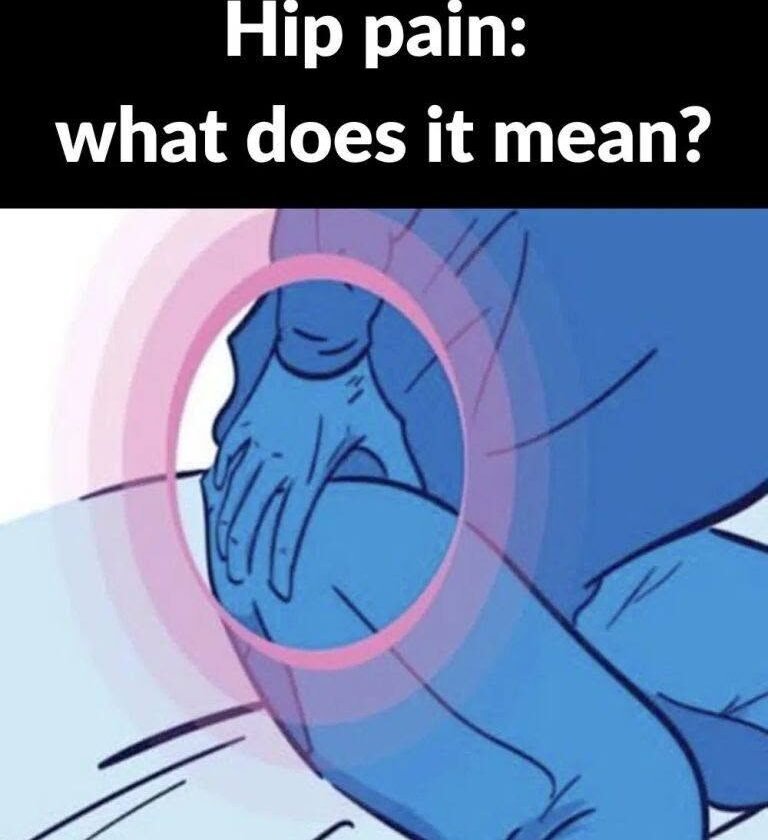
Hip pain is a very common complaint, but it can often be misleading. Because the hip joint shares close quarters with the lower back, pelvis, and groin, “hip pain” doesn’t always mean the actual ball-and-socket joint of the hip is the problem.
To understand what hip pain means, doctors look closely at where the pain is located and what kind of sensation it is.
Location Matters: Where You Feel It Tells a Story
-
Pain in the Front (Groin or Deep Inside the Hip):
-
What it usually points to: Issues originating directly within the hip joint itself.
-
Common culprits: Osteoarthritis of the hip joint, a tear in the labrum (the ring of cartilage supporting the socket), or hip impingement (FAI). Pain here often makes it difficult to put on shoes and socks or step up onto a curb.
-
-
Pain on the Outer Hip (Side of the Thigh or Buttock):
-
What it usually points to: Issues with the soft tissues (muscles, tendons, and bursae) surrounding the joint rather than the joint itself.
-
Common culprits: Trochanteric bursitis (inflammation of the fluid-filled sacs that cushion the hip bone), tendinitis, or tightness in the gluteal muscles. This pain is often aggravated by lying directly on that side or walking long distances.
-
-
Pain in the Back or Radiating Down the Leg:
-
What it usually points to: Referred pain coming from the lumbar spine (lower back) or pelvis.
-
Common culprits: Sciatica, a pinched nerve in the lower back, or sacroiliac (SI) joint dysfunction. Even though it feels like a hip problem, the source is actually structural wear or nerve irritation in the spine.
-
Common Physiological Causes of Hip Pain
-
Osteoarthritis: The gradual wear and tear of the protective cartilage cushioning the hip bones, leading to stiffness, deep aching, and a “grinding” sensation.
-
Bursitis and Tendinitis: Inflammation caused by repetitive overuse, prolonged sitting, or sudden increases in physical activity.
-
Muscle Strains: Overstretching or tearing the hip flexors, groin muscles, or hamstrings.
-
Fractures: Particularly common in older adults or individuals with osteoporosis, often resulting from a fall and accompanied by sudden inability to bear weight.
When to Seek Prompt Medical Attention
While mild, transient muscle soreness after a long walk is normal, you should schedule a medical evaluation—or seek urgent care—if you experience:
-
Inability to bear weight on the leg or an obvious deformity in the joint.
-
Sudden, intense pain accompanied by swelling or bruising around the hip.
-
Signs of infection (such as redness, warmth, or fever accompanying the pain).
-
Pain that wakes you up at night or persists even when you are completely resting.
A simple physical exam and, if necessary, an X-ray or MRI can quickly pinpoint whether your discomfort stems from the joint itself, the surrounding muscles, or your lower back.