Viral health posts love promising instant overnight fixes for complex medical conditions, claiming you can completely “cure poor circulation in just 20 minutes.”
While you can’t permanently reverse underlying vascular disease in a few minutes, vascular specialists and physiotherapists point out that you can drastically boost blood flow, warm up cold extremities, and relieve stagnation in about 20 minutes using targeted movement and physiological triggers.
Here is what actually happens when circulation slows down, and how to safely give your blood flow a rapid boost:
Why Circulation Slows Down (And How a 20-Minute Routine Helps)
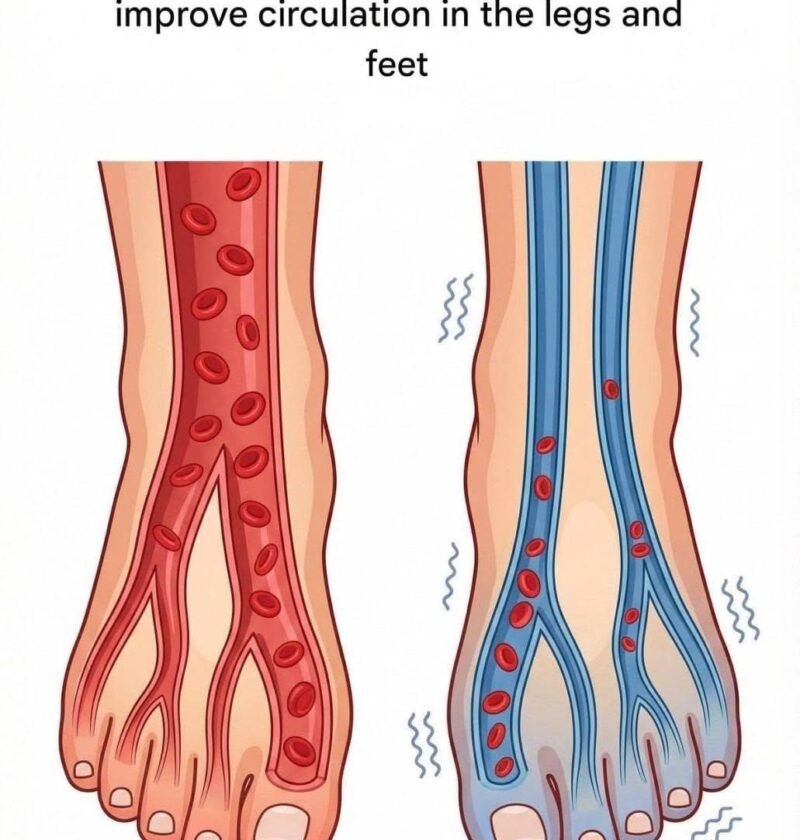
Your circulatory system relies heavily on two things: your heart pumping blood through your arteries, and your skeletal muscles acting like secondary pumps to push deoxygenated blood back up through your veins against gravity.
When you sit or stand still for hours, those muscle pumps turn off, causing blood to pool in your lower legs and extremities, leading to cold toes, stiffness, or tingling. A 20-minute burst of activity re-engages those muscle pumps and dilates blood vessels.
The 20-Minute Circulation-Boosting Routine
If you feel stiff, cold, or sluggish, this simple 20-minute sequence gets your blood moving safely:
Long-Term Habits to Improve Circulation
While a 20-minute routine provides immediate relief, maintaining healthy circulation long-term requires addressing the root causes:
-
Hydrate Constantly: Dehydration thickens your blood, making it harder for your heart to pump efficiently through narrow vessels.
-
Break Up Sitting Time: Set a timer to stand up, stretch, or walk for 2 minutes every half-hour if you have a desk job.
-
Manage Sodium and Diet: Excess sodium causes fluid retention and high blood pressure, while foods rich in nitrates (like beets and leafy greens) naturally support nitric oxide production and blood vessel health.
When Poor Circulation Signals a Medical Issue
Occasional cold hands or feet from sitting still are completely normal. However, you should consult a doctor if you experience:
-
Pain, cramping, or aching in your legs only when walking that disappears with rest (a sign of peripheral artery disease, or PAD).
-
Chronic coldness or numbness in one specific limb or digit.
-
Sores or cuts on your feet or toes that are very slow to heal.