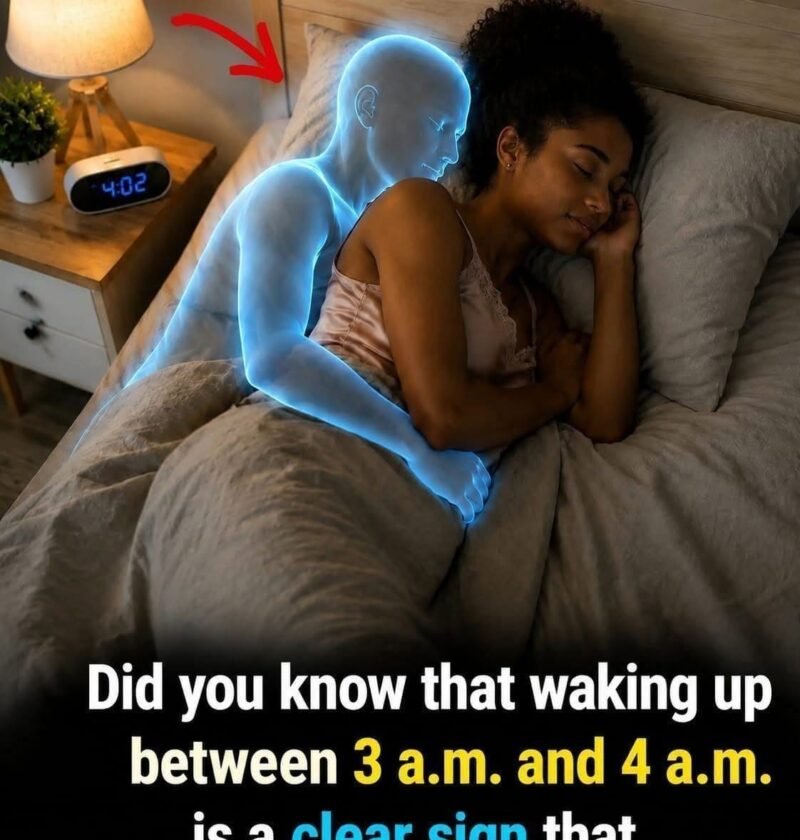
Viral wellness posts and late-night social media videos often claim that consistently waking up at 3:00 or 4:00 AM is a profound mystical sign—such as a spiritual awakening, the “witching hour,” or a specific organ imbalance according to traditional Chinese medicine (like the liver or lungs working overtime).
While these theories make for intriguing storytelling, sleep specialists and medical professionals explain that waking up in the middle of the night has a very clear, biological explanation.
Here is what science actually says about why you wake up in the early morning hours:
### 1. Normal Sleep Architecture (Natural Micro-Awakenings)
Humans do not sleep in one unbroken block through the night. Instead, we cycle through sleep stages every 90 to 110 minutes, moving from deep sleep into lighter REM and non-REM sleep.
* At the end of these sleep cycles (often around 3:00 to 5:00 AM, as the body transitions toward lighter morning sleep), **everyone naturally experiences brief micro-awakenings**.
* Under normal circumstances, you roll over, fall right back asleep, and don’t remember it in the morning. However, if something triggers your nervous system, that micro-awakening turns into a full wake-up.
### 2. The Real Physiological Culprits Behind 3 AM Awakenings
When you consistently snap fully awake at 3:00 or 4:00 AM with an active mind or racing heart, it is usually driven by one of several physiological or environmental factors:
* **Blood Sugar Dips (Cortisol Spikes):** If you eat a heavy, sugary snack late at night or eat very little for dinner, your blood sugar can crash in the middle of the night. When glucose drops too low, your pancreas releases glucagon and your adrenal glands release **cortisol and adrenaline** (stress hormones) to rescue your blood sugar. That sudden surge of cortisol acts like an internal alarm clock, jolting you awake.
* **Anxiety and Mental Stress:** Deep sleep predominates in the first half of the night. By 3:00 or 4:00 AM, your body has processed most of its physical exhaustion, and levels of the stress hormone cortisol begin their natural morning rise. If you are experiencing chronic stress or anxiety, your subconscious mind seizes on this moment, flooding your brain with worry and making it hard to drift back off.
* **Alcohol Breakdown:** While a glass of wine or a nightcap might help you fall asleep faster, the liver metabolizes alcohol about 4 hours later. As the alcohol wears off, it causes a “rebound effect,” triggering sympathetic nervous system activity that frequently wakes people up abruptly in the early morning hours.
* **Mild Sleep Apnea or Airway Restriction:** As muscle tone relaxes deeply during the night, airway resistance can increase. If breathing becomes slightly restricted, the brain panics just enough to trigger a surge of adrenaline to force a deeper breath or a wake-up.
* **Environmental & Age Factors:** A sudden drop in room temperature, a partner snoring, or the natural shift in circadian rhythm that comes with aging can all make early morning awakenings more frequent.
—
### What You Can Do to Sleep Through the Night
If you find yourself consistently staring at the ceiling at 3:00 AM, you can support continuous sleep with a few targeted adjustments:
* **Balance Your Evening Snack:** If you wake up hungry or jittery, try a small protein-and-complex-carb snack before bed (like a spoonful of almond butter on a whole-grain cracker) to stabilize blood sugar through the night.
* **Cut Off Alcohol 3 to 4 Hours Before Bed:** Give your body time to process alcohol before you go to sleep to avoid the middle-of-the-night adrenaline rebound.
* **Manage the “3 AM Brain Dump”:** If anxiety wakes you up, keep a notepad by your bed. Write down whatever is swirling in your mind to offload it from your working memory, allowing your brain to realize it doesn’t need to hold onto it.
* **Avoid Checking the Clock:** Looking at the clock trains your brain to associate 3:00 AM with alertness and frustration, triggering math anxiety (*”If I fall asleep now, I only get two hours…”*). Turn your clock away from view.