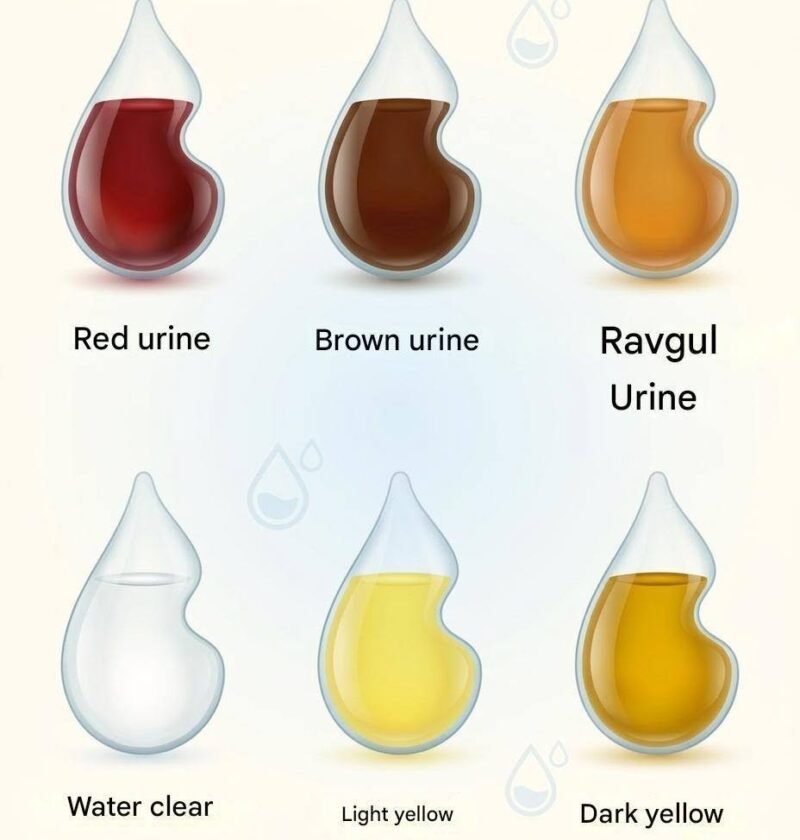
The color of your urine acts as a quick, natural health report card for your body. Ranging from pale yellow to deep amber—or occasionally unexpected shades like pink, blue, or brown—urine color is primarily determined by urobilin (a pigment created when your body breaks down old red blood cells) and how diluted it is by water.
Here is what different urine colors and appearances reveal about your health:
1. The Hydration Spectrum (Yellow Shades)
-
Transparent / Clear: You are drinking too much water. While good hydration is important, constantly clear urine means you may be flushing out essential electrolytes.
-
Pale Straw to Transparent Yellow: Optimal hydration. Your body is well-hydrated, and you are in the healthy sweet spot.
-
Dark Yellow / Honey: Mildly dehydrated. Your body is starting to conserve water. It’s time to drink a glass of water.
-
Amber / Syrup / Brownish-Yellow: Severe dehydration. Your urine is heavily concentrated with waste products. Drink water immediately. If it persists alongside extreme fatigue, it can also indicate liver issues.
2. Unusual Colors and What They Mean
When urine deviates from yellow entirely, it is often caused by foods, medications, or underlying medical conditions:
-
Pink, Red, or Reddish-Brown:
-
The Harmless Cause: Did you recently eat beets, blackberries, or rhubarb? These foods contain natural pigments that can tint your urine pink or red.
-
The Medical Warning: Blood in the urine (hematuria) can indicate a urinary tract infection (UTI), kidney stones, an enlarged prostate, or—most importantly—should be checked by a doctor to rule out kidney or bladder disease.
-
-
Orange:
-
The Cause: Often caused by severe dehydration or certain medications (like rifampin or specific laxatives), or heavy intake of foods rich in beta-carotene (like carrots or sweet potatoes). It can also point to early-stage liver or bile duct issues.
-
-
Blue or Green:
-
The Cause: Rarely, certain harmless food dyes, asparagus, or specific medications (like propofol or amitriptyline) can turn urine green or blue. Extremely rarely, it can signal a rare genetic metabolic disorder (familial hypercalcemia).
-
-
Dark Brown or Cola-Colored:
-
The Cause: Severe dehydration, liver disease (like hepatitis or cirrhosis), or rhabdomyolysis (extreme muscle breakdown from intense injury or overexertion releasing myoglobin into the bloodstream).
-
3. Texture and Clarity Matters, Too
Color isn’t the only indicator; appearance tells a story as well:
-
Cloudy or Milky: Often a sign of a urinary tract infection (UTI), white blood cells in the urine, or kidney stones.
-
Foamy or Effervescent: A little foam from the force of urination is normal, but persistent, heavy, beer-like foam can indicate proteinuria—meaning protein is leaking through your kidneys into your urine, which requires a medical checkup.
When to See a Doctor
If your urine color is unusual due to something you ate or a new medication, it should return to normal within a day or two. However, you should consult a healthcare professional immediately if you notice:
-
Visible blood in your urine (pink or red without eating beets).
-
Dark brown urine accompanied by pale stools and yellowing of the skin/eyes (jaundice).
-
Persistent cloudy, foul-smelling urine accompanied by pain, burning, or fever.