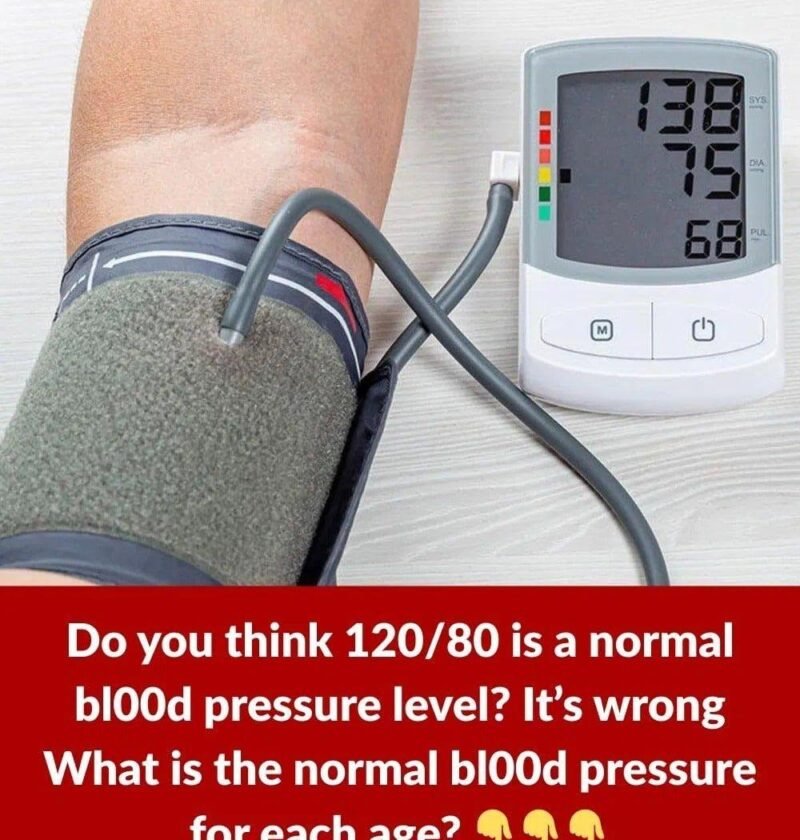
Unlike heart rate, which varies significantly by age, medical guidelines from organizations like the American Heart Association (AHA) state that the optimal target for normal adult blood pressure remains the same across all adult age groups.
However, average blood pressure naturally tends to drift upward as people age because arteries naturally become stiffer over time.
Adult Blood Pressure Categories (Ages 18 and Older)
For any adult, a standard blood pressure reading is categorized as follows:
| Category | Systolic (Top Number) | Diastolic (Bottom Number) | What It Means | |
| Normal | Less than 120 | and | Less than 80 | Optimal heart health. Maintain healthy habits. |
| Elevated | 120–129 | and | Less than 80 | Tends to worsen over time if no changes are made. |
| Stage 1 Hypertension | 130–139 | or | 80–89 | High blood pressure; doctors usually recommend lifestyle changes and evaluate heart disease risk. |
| Stage 2 Hypertension | 140 or higher | or | 90 or higher | High blood pressure; typically requires a combination of medication and lifestyle changes. |
| Hypertensive Crisis | Higher than 180 | and/or | Higher than 120 | Medical emergency. Wait 5 minutes and retest. If it remains this high—or is accompanied by chest pain, shortness of breath, or weakness—call emergency services immediately. |
Blood Pressure in Children and Adolescents
Unlike adults, children do not have a single fixed “normal” number. Normal blood pressure for infants, children, and teens is determined using a sliding scale based on their age, gender, and height percentile.
General averages include:
-
Newborns: Roughly 60–90 / 20–60 mmHg
-
Children (Ages 6–9): Roughly 85–100 / 55–65 mmHg
-
Adolescents (Ages 14–18): Typically ranges between 110–120 / 65–80 mmHg
Pediatricians use specialized percentiles to diagnose high blood pressure in younger populations, where readings consistently above 130/80 mmHg are considered high for older teens.