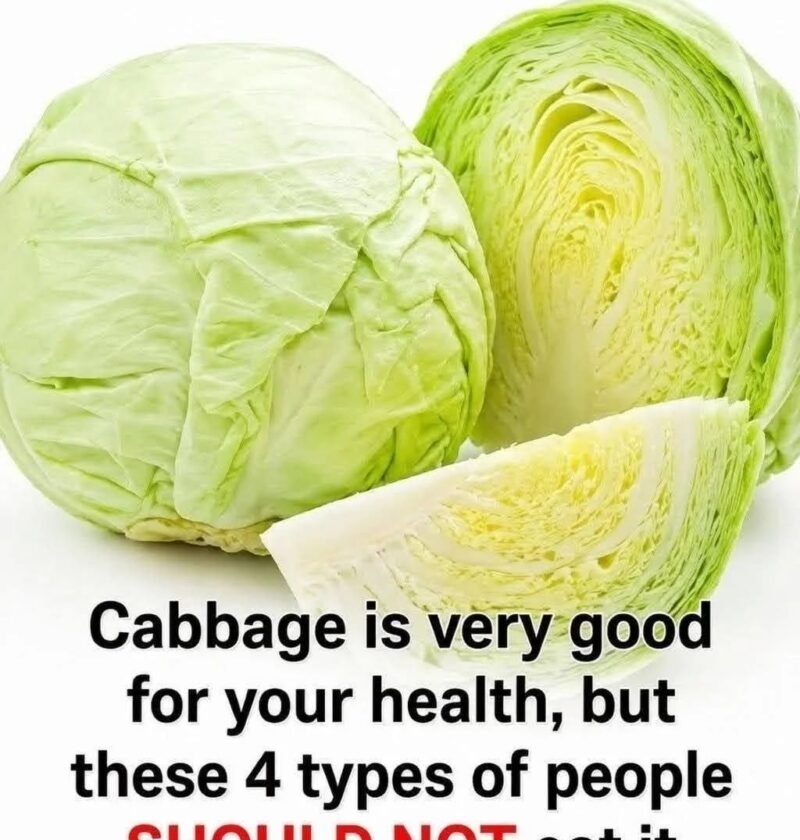
Cabbage is packed with vitamins C and K, fiber, and powerful antioxidants, making it a healthy staple for most people. However, because of its unique nutritional compounds—including complex sugars, goitrogens, and high levels of vitamin K—certain individuals need to exercise caution when eating it, especially in large or raw quantities.
Here are 4 types of people who should be careful with cabbage:
1. People Taking Blood Thinners (Anticoagulants)
-
The Concern: Cabbage is exceptionally rich in vitamin K, a nutrient that plays a direct role in blood clotting. Medications like warfarin (Coumadin) work by counteracting vitamin K to prevent dangerous clots.
-
Why to be careful: Suddenly increasing or fluctuating your intake of vitamin K-rich foods can interfere with how well your blood thinner works.
-
Safe Approach: You don’t necessarily have to ban cabbage from your diet, but consistency is key. Keep your portion sizes steady from week to week so your doctor can maintain your stable therapeutic dosage.
2. Individuals with Hypothyroidism (Underactive Thyroid)
-
The Concern: Cruciferous vegetables like cabbage contain compounds called goitrogens. When consumed raw, goitrogens can interfere with the thyroid gland’s ability to absorb iodine, which is necessary for producing thyroid hormones.
-
Why to be careful: For individuals with an existing iodine deficiency or an underactive thyroid, large amounts of raw cabbage could potentially suppress thyroid function further.
-
Safe Approach: Cooking cabbage breaks down goitrogenic compounds significantly, making cooked cabbage much safer for thyroid health. Moderate portions are typically well-tolerated.
3. People Prone to Irritable Bowel Syndrome (IBS) or Gas
-
The Concern: Cabbage contains raffinose, a complex sugar that humans lack the specific enzyme to break down fully in the upper gut. When it reaches the large intestine, gut bacteria ferment it, producing gas. It is also high in certain FODMAPs.
-
Why to be careful: Eating raw cabbage can trigger severe bloating, abdominal cramping, gas, and discomfort for those with sensitive digestive systems or IBS.
-
Safe Approach: Steaming, fermenting (like in sauerkraut), or thoroughly cooking cabbage breaks down some of these complex fibers and sugars, making it much easier on the digestive tract.
4. Individuals with Chronic Kidney Disease (CKD) on Potassium Restrictions
-
The Concern: While cabbage is generally considered a moderate-potassium vegetable compared to potatoes or spinach, raw or large portions can still contribute a noticeable amount of potassium to the diet.
-
Why to be careful: Advanced kidney disease reduces the body’s ability to filter excess potassium from the blood, which can lead to dangerous cardiac accumulation (hyperkalemia).
-
Safe Approach: Individuals on strict renal diets should consult a nephrologist or registered dietitian regarding portion sizes and whether boiling and draining cabbage helps reduce its mineral content.