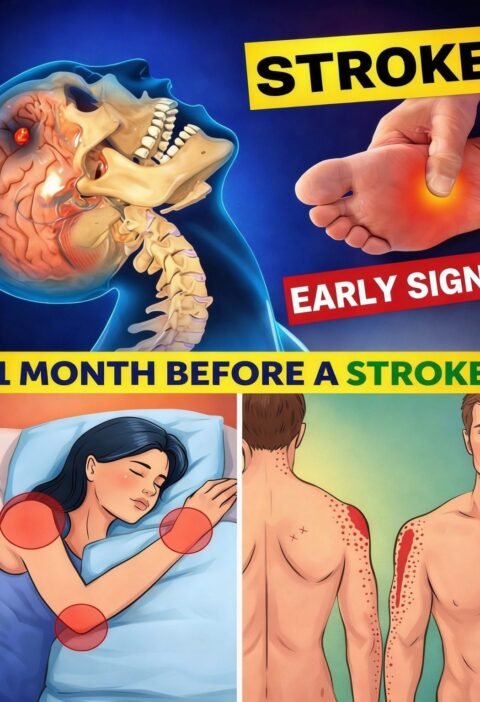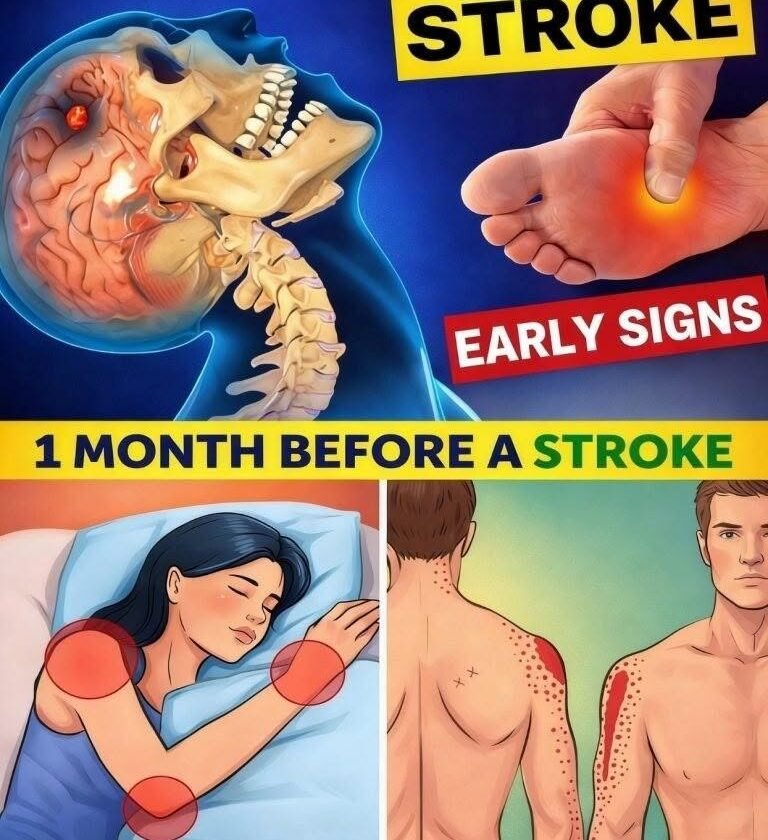
A stroke is a medical emergency, but research and clinical observations show that the body often sends subtle warning signs weeks—or even a month—before a major stroke occurs (often referred to as a “ministroke” or Transient Ischemic Attack, alongside other neurological prodromal symptoms). Recognizing these early signals can save a life.
Here are the 8 warning signs that may appear up to a month before a stroke, followed by 9 practical tips to prevent it.
8 Warning Signs of a Stroke (Up to 1 Month Before)
-
1. Transient Numbness or Weakness: Sudden, temporary weakness or a “pins and needles” sensation, typically affecting just one side of the face, arm, or leg.
-
2. Sudden Vision Changes: Brief blurring, double vision, or temporary loss of sight in one or both eyes.
-
3. Unexplained Balance Issues or Dizziness: Sudden bouts of unsteadiness, vertigo, or difficulty walking that seem to come out of nowhere.
-
4. Subtle Confusion or Difficulty Speaking: Momentary trouble finding words, slurring speech, or difficulty understanding what others are saying.
-
5. Sudden, Severe Headaches: A blinding, unusual headache unlike anything you’ve experienced before, often described as a “thunderclap” headache, sometimes accompanied by dizziness or altered consciousness.
-
6. Unexplained Fatigue and Sleep Disturbances: Deep, profound exhaustion or sudden changes in sleep patterns that do not resolve with rest.
-
7. Brief Memory Lapses or Brain Fog: Sudden, short-lived episodes of disorientation or trouble concentrating.
-
8. Facial Droop or Asymmetry: A fleeting feeling of stiffness or a temporary droop in one corner of the mouth, often noticed in the mirror or pointed out by a family member.
Note: If you or someone else experiences any of these symptoms abruptly—remembering the FAST acronym: Facial drooping, Arm weakness, Speech difficulty, Time to call emergency services—seek immediate medical help.
9 Tips to Prevent a Stroke
-
1. Monitor and Control Blood Pressure: High blood pressure is the single leading cause of strokes. Check it regularly and keep it within your doctor’s target range.
-
2. Manage Cholesterol and Blood Sugar: High LDL cholesterol and uncontrolled diabetes damage blood vessels, increasing the risk of clots and plaque buildup.
-
3. Maintain a Heart-Healthy Diet: Focus on whole foods, leafy greens, fiber, healthy fats (like olive oil and omega-3s), and drastically reduce processed sodium and added sugars.
-
4. Stay Physically Active: Aim for at least 30 minutes of moderate exercise most days of the week (such as brisk walking, swimming, or cycling) to keep your cardiovascular system strong.
-
5. Maintain a Healthy Weight: Excess weight places added stress on your heart and blood vessels, raising both blood pressure and diabetes risk.
-
6. Quit Smoking: Smoking thickens the blood, increases plaque buildup in the arteries, and dramatically multiplies stroke risk.
-
7. Limit Alcohol Intake: Excessive drinking raises blood pressure and can trigger irregular heart rhythms like atrial fibrillation, a major stroke risk factor.
-
8. Get Quality Sleep: Treat conditions like sleep apnea and aim for 7 to 8 hours of restorative sleep per night.
-
9. Manage Stress: Chronic stress floods your body with cortisol and keeps blood pressure elevated; incorporate mindfulness, deep breathing, or hobbies into your routine to decompress.