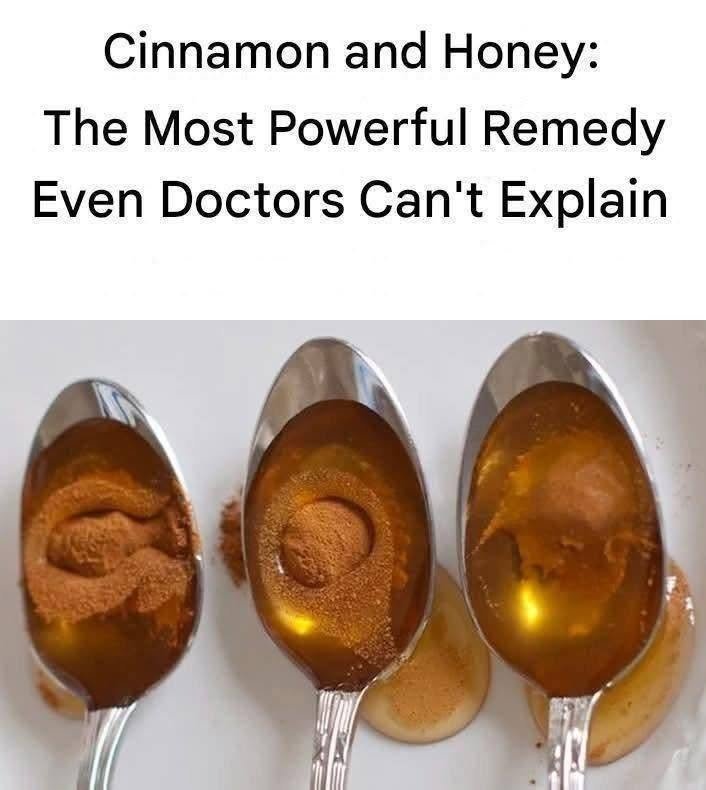
Claims that the combination of cinnamon and honey is a “powerful remedy” that even doctors can’t explain are a hallmark of viral health myths. These articles often suggest that this simple kitchen mixture cures everything from arthritis and heart disease to chronic fatigue, framing it as a mysterious medical breakthrough.
In reality, while both ingredients have individual properties, combining them is not a medical cure-all, and there is nothing scientifically inexplicable about how they work.
What Science Actually Says About Cinnamon and Honey
-
Honey: Honey is primarily a mixture of sugars (fructose and glucose) along with small amounts of amino acids, vitamins, and antioxidants. It has well-documented, mild antimicrobial properties and can soothe a cough, but it is still fundamentally a form of sugar and should be consumed in moderation.
-
Cinnamon: Cinnamon contains bioactive compounds (such as cinnamaldehyde) with antioxidant and anti-inflammatory properties. Some studies suggest it may play a modest role in supporting blood sugar management, but it is not a replacement for medical treatment.
-
The “Combination” Myth: Mixing them together does not create a synergistic chemical reaction that transforms them into a pharmaceutical-grade remedy. Eating them together provides the nutritional benefits of both, but it cannot reverse chronic diseases.
Why Viral Health Myths Spread So Easily
These sensationalized claims usually thrive because they mix a grain of truth with exaggeration:
-
Appealing to Natural Remedies: People love the idea that simple, inexpensive kitchen ingredients can outperform modern medicine.
-
Misinterpreting Studies: Small laboratory or animal studies on isolated compounds (like testing cinnamon extract in a petri dish) are often exaggerated into claims that eating a spoonful of honey and cinnamon cures complex human illnesses.
Are you looking at natural remedies for a specific health goal, such as managing blood sugar or soothing a cough?