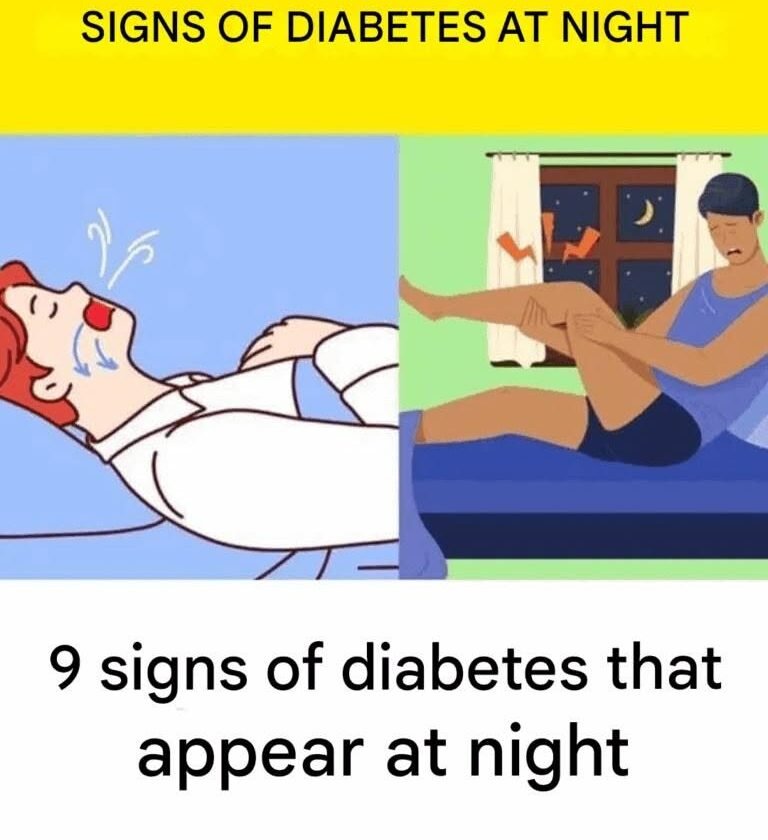
When blood sugar levels are unstable, the body often sends subtle—or disruptive—signals during the night. Because we are resting, certain symptoms caused by high or fluctuating glucose become much harder to ignore.
Here are 9 common signs of diabetes that often manifest or worsen at night:
1. Frequent Nighttime Urination (Nocturia)
When excess glucose builds up in the blood, the kidneys have to work overtime to filter and absorb it. When they can’t keep up, the excess sugar spills into the urine, pulling extra fluids with you. This often leads to waking up multiple times a night to use the bathroom.
2. Intense Thirst Upon Waking
Because your body is losing fluids through frequent urination overnight, you may wake up with a severely dry mouth, a parched throat, and an overwhelming craving for water in the middle of the night or first thing in the morning.
3. Nocturnal Hypoglycemia (Night Sweats)
For individuals already managing diabetes (often due to medication or insulin timing), blood sugar can drop too low while sleeping. This triggers a release of stress hormones like adrenaline, leading to profuse sweating, clammy skin, and waking up drenched or shivering.
4. Numbness, Tingling, or “Pins and Needles” in the Feet
High blood sugar over time can damage peripheral nerves (diabetic neuropathy). While this can happen during the day, it is frequently noticed more at night when lying down in bed, presenting as burning sensations, prickling, or numbness in the feet and lower legs.
5. Nighttime Leg Cramps
Sudden, painful muscle cramps in the calves or feet can interrupt sleep. Dehydration from frequent urination and imbalances in electrolytes caused by fluctuating blood sugar levels can make muscles much more prone to cramping after dark.
6. Restless Legs Syndrome (RLS) Discomfort
Studies have shown a strong correlation between diabetes, nerve changes, and Restless Legs Syndrome. An irresistible, uncomfortable urge to move your legs while trying to unwind or fall asleep can severely disrupt your rest.
7. Unexplained Insomnia or Disrupted Sleep
Between the physical discomfort of nerve pain, frequent bathroom trips, night sweats, and the physiological stress of fluctuating glucose, deep sleep is frequently interrupted, making it difficult to stay asleep through the night.
8. Vivid or Disturbing Dreams (Linked to Hypoglycemia)
If blood sugar drops sharply during sleep, the brain reacts to the stress. This sudden surge in stress hormones can provoke unusually vivid, bizarre, or unsettling dreams, sometimes startling a person awake with a racing heartbeat.
9. Headmares or Waking Up with a Dull Headache
Waking up with a headache can be a sign of nocturnal hypoglycemia (blood sugar dropping too low while asleep) or somogyi effect (where blood sugar drops dangerously low in the middle of the night, causing the body to release a surge of counter-regulatory hormones that spike blood sugar high by morning).
If you or someone you know is experiencing persistent nighttime disruptions like these alongside fatigue or increased thirst, it is worth discussing with a healthcare provider for a simple blood glucose screening.