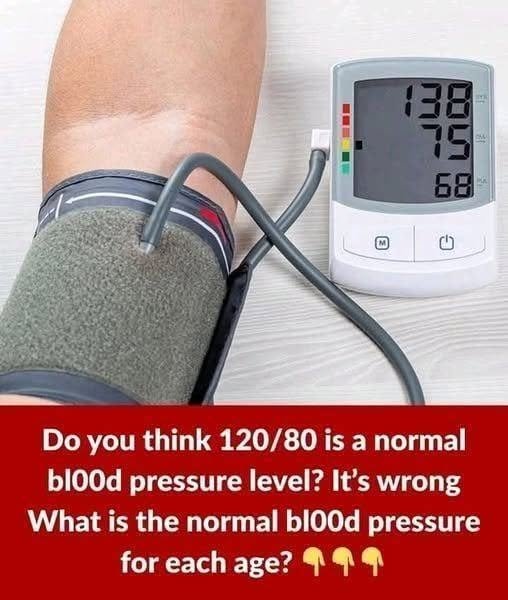
There isn’t a separate “normal” blood-pressure number for every age. For adults, the current AHA/ACC guideline uses the same categories across adult age groups. (American Heart Association)
Blood pressure ranges for adults
| Reading | Category |
|---|---|
| Below 120/80 mmHg | ✅ Normal |
| 120–129 and below 80 | Elevated |
| 130–139 or 80–89 | Stage 1 high blood pressure |
| 140 or higher, or 90 or higher | Stage 2 high blood pressure |
| Above 180 and/or 120 | ⚠️ Severe hypertension |
What about older people?
A common misconception is that “120 + your age” is a normal target—for example, 150 being normal at age 70. That isn’t the current guideline. The 2025 AHA/ACC guideline gives an overall treatment goal of below 130/80 mmHg for adults, although individual targets can differ depending on health conditions, frailty, life expectancy and other circumstances. (American Heart Association)
So, roughly:
- Age 18–39: aim for <120/80
- Age 40–59: aim for <120/80
- Age 60–69: aim for <120/80
- Age 70–79: aim for <120/80, but treatment goals may be individualized
- Age 80+: targets may need to be individualized based on overall health and tolerance
Importantly, one elevated reading doesn’t necessarily mean you have hypertension. Blood pressure varies during the day, and diagnosis generally relies on repeated, properly measured readings. (newsroom.heart.org)
If you give me your age and your blood-pressure reading (for example, 145/85), I can tell you exactly which category it falls into.