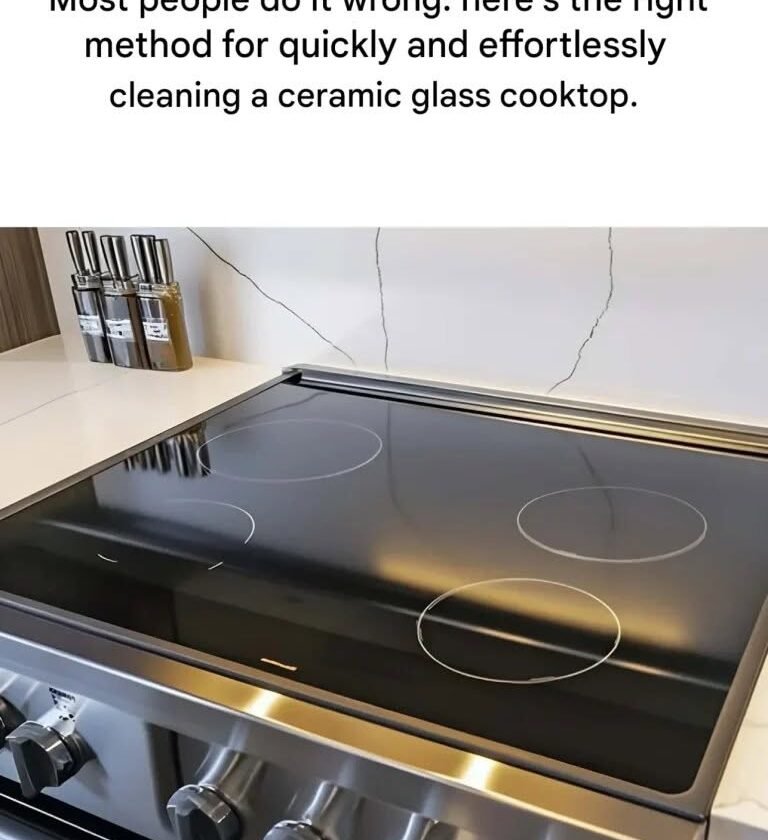
Ah, stepping away from the sensationalist panic and landing right where the rubber meets the road: practical home maintenance!
Ceramic glass cooktops (like Ceran or glass-top electric and induction ranges) are gorgeous when they’re brand new, but the moment you boil over a pot of pasta or sear a steak, they look like a crime scene. Because the glass is surprisingly easy to scratch—and abrasive scrubbing pads are its worst enemy—the internet is flooded with conflicting cleaning hacks (some of which will happily ruin your $1,500 stove).
Here is the genuinely effective, scratch-free blueprint for keeping a glass cooktop gleaming:
The Golden Rule: What NOT to Do
Before diving into what works, let’s clear out the dangerous myths floating around online:
-
Never use steel wool, abrasive green scouring pads, or harsh metal scrapers at the wrong angle. They will instantly micro-scratch or deeply gouge the glass, permanently dulling the finish.
-
Avoid baking soda pastes applied with aggressive circular scrubbing. While baking soda is mildly abrasive (which is why people love it), scrubbing hard with a dry or semi-dry powder on glass can create fine swirl marks over time.
The Step-by-Step Scratch-Free Cleaning Method
1. The Daily Wipe (For Light Grease and Spills)
-
What you need: A soft microfiber cloth and a mild dish soap or a dedicated glass cooktop cleaner (like Weiman or Cooktop Magic).
-
How to do it: Wait until the surface is completely cool to the touch. Spray your cleaner or soapy water, let it sit for 30 seconds to break down surface oils, and wipe gently with a damp microfiber cloth. Buff dry with a second clean cloth to prevent streaks.
2. The Steam-Softener Trick (For Stuck-On, Baked-On Grime)
When sugar, sauce, or spilled milk bakes onto a hot burner, it carbonizes into a rock-hard crust that feels impossible to remove without scratching. Skip the elbow grease and use chemistry and steam instead:
-
The Method: Lay a clean, hot, wet dish towel over the burnt-on spots for about 15 to 20 minutes. The moisture and gentle heat will rehydrate and soften the baked-on sugar or starch.
-
The Follow-Up: Once softened, wipe away what you can with a soft sponge.
3. The Professional Move: Using a Razor Blade Safely
It sounds terrifying to take a razor blade to a glass stovetop, but this is exactly what professional appliance repair technicians and manufacturers recommend for heavy, baked-on residue—provided you do it right.
-
The Tool: A single-edge razor blade in a proper metal scraper tool (or a specialized cooktop scraper).
-
How to do it safely:
-
Make sure the cooktop is cool.
-
Apply a few drops of white vinegar or cooktop cleaner to lubricate the area.
-
Hold the razor blade at a 30 to 45-degree angle flat against the glass (never dig the corner or edge straight down into the glass).
-
Gently push the blade under the burnt-on gunk. It will slice right underneath the carbon residue without scratching the glass underneath.
-
Wipe clean with a microfiber cloth.
-
Pro-Tips to Keep It Clean Longer
-
Never drag heavy cast iron or heavy-bottomed pans across the glass. Always lift them when moving them to a different burner to avoid surface scratches and minor chipping.
-
Clean spills before you cook again. If you boil over sugar water and cook over it again next time you turn the burner on, that sugar will bake on even harder, making future cleaning ten times harder.
💡 The Bottom Line: You don’t need a secret chemical compound or an expensive internet gadget to keep a glass cooktop spotless. A little dish soap, a hot towel compress for stuck-on spots, a proper cooktop cream, and a correctly angled razor blade will keep your stove looking brand new for years.
Have you been battling a specific kind of stubborn burn mark on your stove, or just looking to upgrade your routine maintenance?