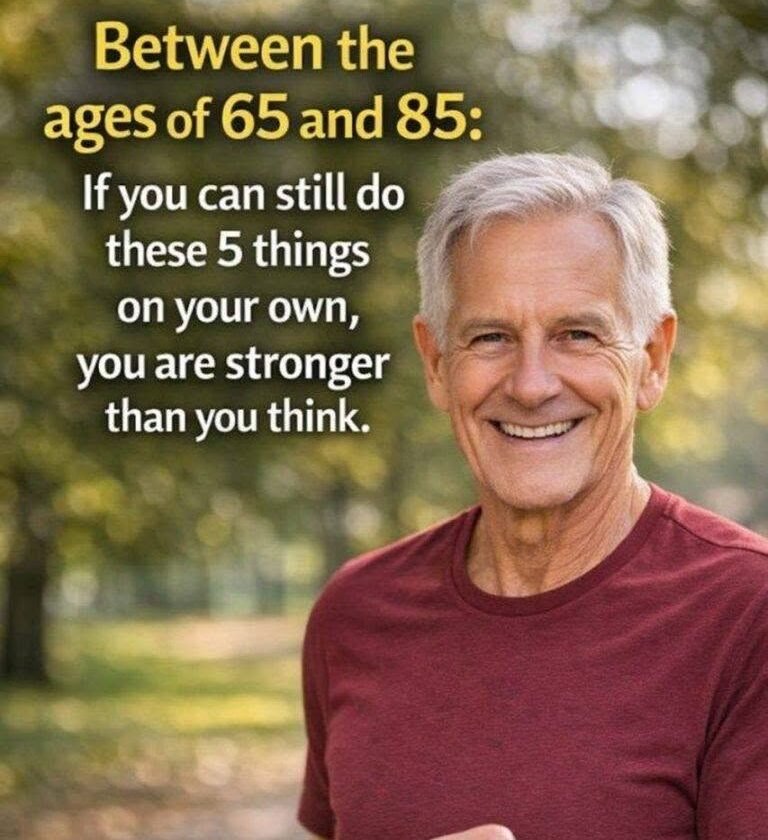
…the kind of uplifting, strength-affirming headline we love to see instead of the usual doom-and-gloom clickbait!
As we’ve discussed when looking at physical health and aging, staying mobile, balanced, and independent as the decades tick by isn’t about running marathons—it’s about maintaining functional fitness. Geriatricians and physical therapists use specific, everyday movements to measure how well our muscles, joints, and nervous systems work together to keep us safe and self-sufficient.
The 5 Functional Tests of Strength and Independence
If an article like this highlights key milestones for adults between 65 and 85, it’s almost certainly focusing on these core pillars of physical autonomy:
-
The Floor-to-Stand Transition (Getting Up Without Help):
-
Why it matters: Being able to lower yourself to the floor—and, more importantly, push yourself back up without needing to haul yourself up by heavy furniture—requires incredible lower-body power, core strength, and balance.
-
-
Carrying Heavy Groceries:
-
Why it matters: Lifting a gallon of milk or a bag of groceries and carrying it across a room tests your grip strength, upper back endurance, and stability. Grip strength, in particular, is frequently studied by doctors as a powerful general marker of overall biological aging and vitality.
-
-
Climbing a Flight of Stairs Without Stopping:
-
Why it matters: Stairs test your cardiovascular stamina combined with unilateral leg strength (since you are lifting your entire body weight one leg at a time). Maintaining this ability means your knees, hips, and heart are working in harmony.
-
-
The Single-Leg Stand (Balance Test):
-
Why it matters: Can you stand on one leg for 10 seconds with your eyes open (or even closed)? Balance relies heavily on proprioception—your brain’s awareness of where your body is in space. Good balance is the ultimate shield against dangerous falls.
-
-
Dressing and Grooming Without Assistance:
-
Why it matters: Often called an “Activities of Daily Living” (ADL) benchmark, being able to put on socks, tie shoes, step into pants, and reach overhead to wash your hair requires dynamic shoulder mobility, hip flexibility, and core stability.
-
Why Functional Strength Matters More Than Gym Numbers
When we are younger, fitness is often measured by how much weight we can bench press or how fast we can run. As we age into our 60s, 70s, and 80s, fitness translates directly to freedom.
The wonderful thing about functional strength is that it’s “use-it-or-lose-it.” Simple habits—like taking daily walks, doing gentle bodyweight squats to a chair, practicing balance while brushing your teeth, or carrying your own bags—preserve these exact capabilities year after year.
How did you feel about that list? Are you or someone you know actively keeping up with these everyday feats of strength?