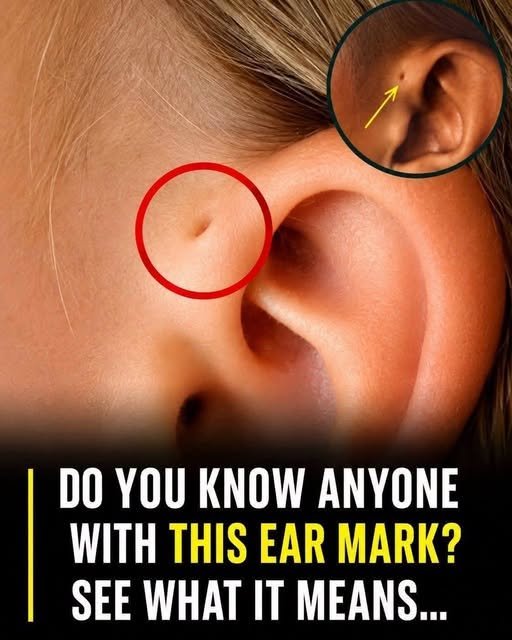
Viral health reels love to tease a mysterious “ear mark”—usually pointing to a crease in the earlobe and claiming it’s a terrifying secret indicator that your heart is about to give out.
Cardiologists and medical researchers acknowledge that while this physical marker has a real medical name and a documented statistical correlation, it is far from a simple crystal-ball prophecy.
What is the “Ear Mark”? (Frank’s Sign)
Medically, that diagonal line running across the earlobe from the tragus to the edge is known as Frank’s sign (named after Sanders T. Frank, a physician who first noted it in the 1970s).
-
What Medical Studies Show:
-
Numerous clinical studies have observed a statistical correlation between a deep diagonal earlobe crease and an increased risk of cardiovascular disease and coronary artery atherosclerosis.
-
The theory is that microvascular changes, loss of elastic fibers, and poor blood supply that affect small blood vessels in the heart can similarly affect the micro-vessels in the earlobe.
-
-
The Nuance (Correlation vs. Causation):
-
Aging and genetics also play a massive role in whether someone develops skin creases, including wrinkles on the face and folds on the earlobes.
-
Furthermore, older age is a primary risk factor for both heart disease and skin wrinkling, meaning the crease often simply coincides with getting older.
-
The Reality Check: Don’t Panic Over a Crease
-
It’s a Clue, Not a Diagnosis: Finding a diagonal crease on your earlobe does not mean you have active heart disease, nor does the absence of a crease guarantee a clean bill of health.
-
Focus on Real Indicators: Instead of looking at physical quirks for health predictions, cardiologists rely on hard data: blood pressure readings, lipid panels (cholesterol and triglycerides), fasting blood glucose, lifestyle habits, and formal cardiovascular risk assessments.
Are you looking into physical health markers out of curiosity, or keeping an eye on your long-term cardiovascular health?