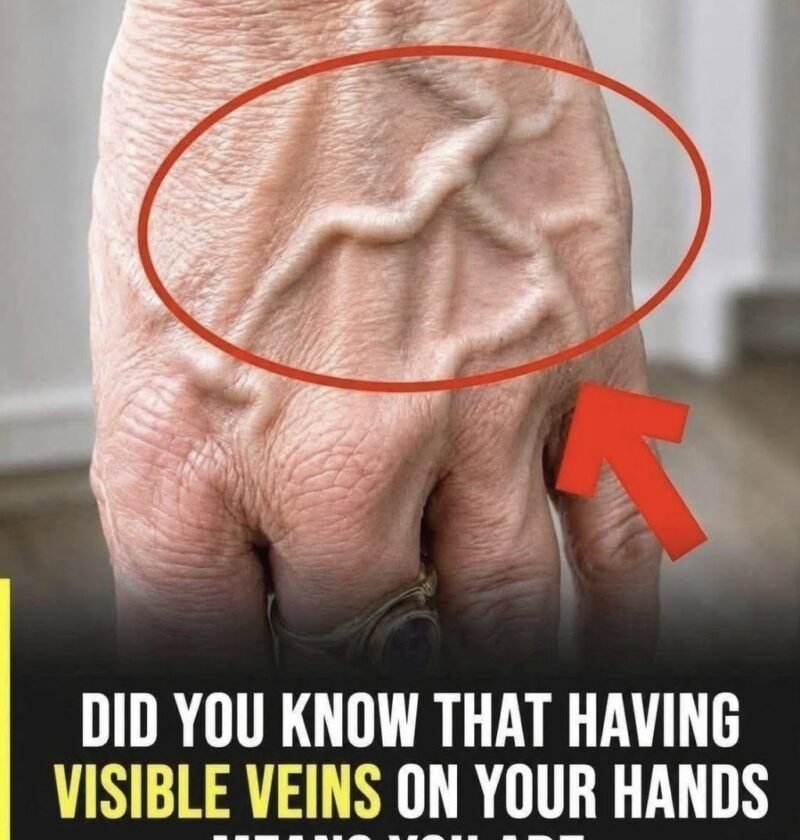
Viral wellness reels love to tease dramatic claims like “Having visible veins means you are…”—usually jumping to sensationalized conclusions, such as claiming you possess elite athletic genetics, extreme biological youth, or conversely, a looming cardiovascular disaster.
Vascular specialists and physiologists point out a much simpler truth: visible veins are exceptionally common and usually have very mundane, physical explanations.
What Having Visible Veins Actually Tells You
-
Low Body Fat Percentage:
-
The connection: Fat sits directly beneath your skin as an insulating layer. If you have a lower overall body fat percentage, that layer is thinner, meaning blood vessels running close to the surface are naturally easier to see. This is why athletes and very fit individuals often have prominent hand or arm veins.
-
-
Genetics and Skin Tone:
-
The connection: Genetics dictate how thick your skin is and how close your superficial veins lie to the surface. Furthermore, people with fair complexions often notice their veins much more easily simply because the skin is more translucent.
-
-
Age and Natural Skin Changes:
-
The connection: As we age, our skin naturally loses collagen and elasticity, becoming thinner. At the same time, subcutaneous fat diminishes, which often makes veins on the hands, arms, and legs more prominent over time.
-
-
Physical Exertion, Heat, and Blood Pressure:
-
The connection: When you exercise, your body generates heat. To cool you down, your blood vessels dilate (expand) and push closer to the skin’s surface to release warmth. Heavy lifting or high blood pressure temporarily increases blood volume and pressure, making veins bulge out more noticeably.
-
When to Pay Attention vs. When It’s Normal
While normal vascular visibility is harmless, doctors advise keeping an eye out for specific warning signs:
-
Varicose Veins: If veins in your legs become twisted, swollen, bulging, aching, or accompanied by heavy, tired limbs, it can indicate venous insufficiency (where the tiny one-way valves inside your veins weaken and struggle to push blood back up to your heart).
-
Sudden Changes: If veins pop up abruptly, become hard, painful, or tender to the touch, it warrants a professional medical checkup.
Are you noticing new vascular changes, or just curious about what influences how prominent your veins look?