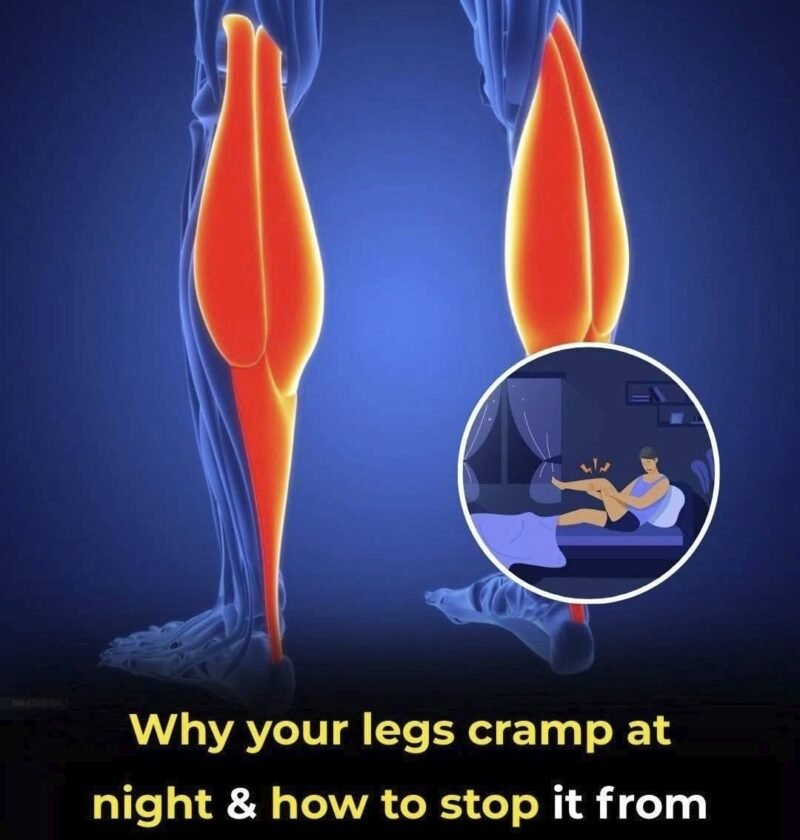
There are few jolts quite as painful or jarring as waking up in the middle of the night with your calf muscle locking up into a tight, agonizing knot. Nocturnal leg cramps usually target the calf muscles or the arches of the feet, leaving you desperately stretching your leg in the dark.
While they often strike without warning, sports medicine doctors and neurologists point to several common physiological triggers behind nighttime cramps.
Why Do Leg Cramps Happen at Night?
-
Muscle Fatigue and Overexertion:
-
Why it happens: If you spent the day standing for hours, walking long distances, or pushing through an intense workout, your muscle fibers experience micro-strains. As your body relaxes into sleep, exhausted muscles can misfire and spasm.
-
-
Dehydration and Electrolyte Imbalance:
-
Why it happens: Muscles rely on a delicate balance of water and minerals—specifically potassium, magnesium, calcium, and sodium—to contract and relax smoothly. If you are dehydrated or low on these electrolytes, nerve impulses misfire, causing the muscle to lock up instead of relaxing.
-
-
Prolonged Static Positioning (“Toe-Pointing”):
-
Why it happens: The way you sleep matters. If you sleep on your stomach or back with your toes pointed downward, your calf muscles are held in a shortened, contracted position for hours. When you suddenly stretch or move, the muscle rebels and cramps.
-
-
Poor Circulation:
-
Why it happens: Reduced blood flow to the lower extremities (sometimes due to peripheral artery disease, sitting too long during the day, or tight sleeping positions) deprives resting muscles of the oxygen they need, triggering sudden spasms.
-
-
Medication Side Effects:
-
Why it happens: Certain common medications—particularly diuretics (water pills) prescribed for high blood pressure—can rapidly flush electrolytes out of your system, making nighttime cramping a frequent side effect.
-
How to Stop a Cramp Fast (And Prevent Future Ones)
-
When a cramp strikes: Instantly stretch the muscle in the opposite direction. If your calf is locked, straighten your leg, flex your foot upward (pulling your toes toward your shin), or gently massage the area. Walking around on a cold floor for a minute can also help reset the muscle reflex.
-
Stay Ahead with Hydration: Drink plenty of water throughout the day, and incorporate electrolyte-rich foods like bananas, leafy greens, nuts, and seeds into your diet.
-
Gentle Bedtime Stretching: Doing a 60-second calf stretch against your bedroom wall right before getting into bed can prevent muscles from locking up overnight.
Do you experience these sudden nighttime cramps frequently, or was it just a one-off jolt after a long day on your feet?