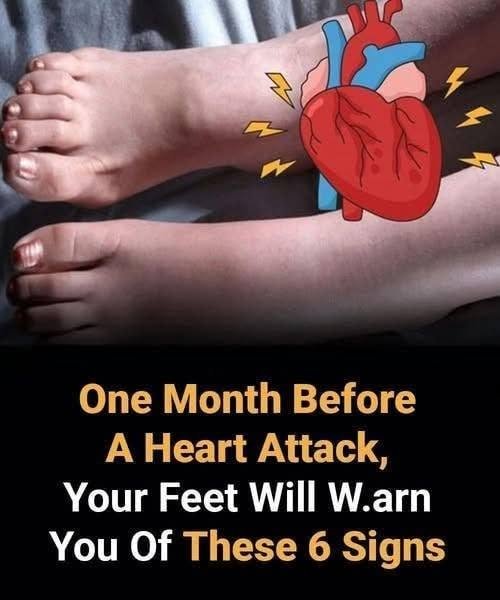
Sensationalist internet headlines frequently claim that feet can reliably predict a heart attack “exactly one month in advance.” In reality, cardiology and vascular medicine do not work with a strict countdown calendar.
However, because the feet and lower extremities are the farthest points from the heart, they can act as an early barometer for failing cardiovascular efficiency, poor circulation, or systemic fluid backup. When the heart begins to struggle weeks or months before a major cardiac event or heart failure exacerbation, specific signs often show up in the feet and legs.
Here are the key vascular and physiological warning signs in the feet that doctors look out for, including the critical fluid indicator:
1. Persistent Peripheral Edema (Swelling in the Feet and Ankles)
-
What it looks like: Puffy feet or ankles that leave a noticeable indentation (pit) when you press your thumb into the skin.
-
The Connection: When the heart’s pumping efficiency declines, blood flow slows down, and fluid begins to back up in the circulatory system. Gravity pulls this excess fluid downward into the lowest points of the body—the feet and ankles. While swelling can have many causes (like vein issues or long sitting hours), sudden or worsening bilateral foot swelling is a classic sign of cardiac strain.
2. Cold Feet and Poor Peripheral Circulation
-
What it looks like: Feet that feel perpetually ice-cold to the touch, even in a warm room, sometimes accompanied by pale or slightly bluish skin tones.
-
The Connection: When cardiac output drops, the body instinctively prioritizes sending warm, oxygenated blood to core vital organs (like the brain and heart), constricting blood vessels in the extremities. Chronic poor circulation leaves the feet starved of optimal blood flow.
3. Pain, Heaviness, or Cramping with Exertion (Peripheral Artery Disease Clues)
-
What it looks like: A deep, aching cramp or heaviness in the feet, calves, or thighs that flares up when walking and quickly disappears when you rest.
-
The Connection: This is known as claudication. It occurs when plaque buildup narrows the arteries supplying the lower limbs (Peripheral Artery Disease, or PAD). Because PAD and coronary artery disease share the exact same root cause—systemic atherosclerosis—severe plaque in the leg arteries strongly signals that plaque is likely narrowing the arteries feeding the heart as well.
4. Slow-Healing Sores, Ulcers, or Brittle Toenails
-
What it looks like: Small cuts, sores, or dry cracks on the feet that take weeks or months to heal, alongside thin skin or slow-growing, brittle toenails.
-
The Connection: Skin healing and tissue repair require a robust supply of oxygenated blood and nutrients. When chronic vascular insufficiency prevents this, minor foot injuries turn into persistent, non-healing wounds.
5. Sudden Numbness, Tingling, or “Pins and Needles”
-
What it looks like: Unexplained numbness or a cold, prickling sensation in the toes or soles of the feet that isn’t caused by sitting in an awkward position.
-
The Connection: Severely compromised blood flow starves peripheral nerve endings of oxygen, leading to localized neuropathy-like sensations in the feet.
6. Discolored, Shiny, or Hairless Skin on the Lower Legs and Feet
-
What it looks like: Skin on the lower legs and feet that appears tight, shiny, completely hairless, or develops a reddish-brown discoloration.
-
The Connection: Advanced chronic ischemia (lack of blood flow) alters skin texture and pigment as tissue health deteriorates over time.
Understanding the Bigger Picture
While a single sign like cold feet can simply mean poor circulation or cold weather, a combination of progressive lower leg swelling, exercise-induced cramping, and fatigue warrants a professional medical evaluation. Cardiovascular health is systemic—what happens in your feet often reflects the health of your heart and blood vessels.
Are you or someone you know noticing any unusual swelling, persistent coldness, or discomfort in your feet or legs recently?