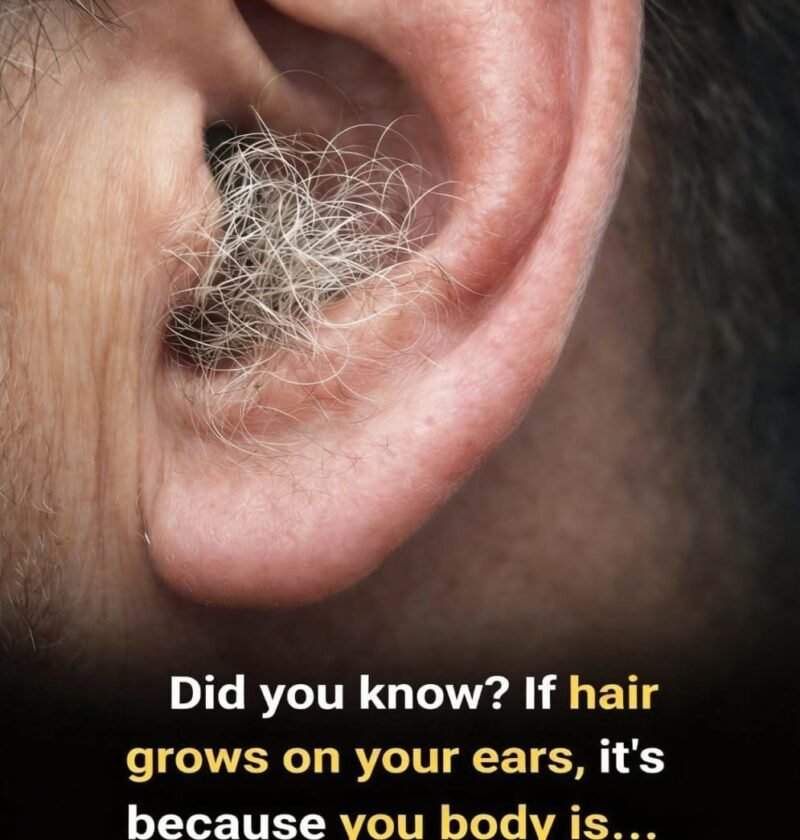
When people talk about unusual signs on or around the ears, the conversation usually turns to Frank’s sign (the diagonal crease on the earlobe), which clinical researchers have studied for its potential link to cardiovascular health. However, when it comes to ear hair specifically, what do doctors actually say?
While thick or bristly ear hair can be a surprising or frustrating part of aging, medical professionals view it primarily through a mix of genetics, hormones, and normal physiology, rather than a direct emergency red flag.
What Causes Ear Hair Growth?
-
Hormones and Androgens: Hair growth on the ears (and nose) is heavily influenced by sensitivity to dihydrotestosterone (DHT), an active derivative of testosterone. As men age, hair follicles in certain areas actually become more sensitive to androgens, leading to coarser, thicker, and more visible terminal hairs.
-
Genetics and Aging: Just like male-pattern baldness or graying, the tendency to grow prominent ear hair is largely hardwired into your DNA. It becomes much more common as people move past middle age.
Is There Any Connection to Health?
Unlike earlobe creases (which have statistical correlations to arterial stiffness or aging blood vessels), heavy ear hair is rarely a standalone diagnostic symptom of a major disease.
However, medical interest in ear hair historically stems from a few niche studies:
-
The “Cardiovascular Connection” Myth vs. Reality: Back in the 1970s and 80s, a few small medical papers explored whether a correlation existed between hairy ears, diagonal earlobe creases, and heart disease. While subsequent larger studies showed that ear hair itself is mostly just a byproduct of aging and androgen levels rather than a reliable predictor of heart trouble, it often co-occurs simply because both aging and coronary risks share a timeline.
-
Hormonal Shifts: In rare cases, sudden, excessive, or abnormal hair growth (hirsutism) across unusual parts of the body can point to underlying endocrine or hormonal imbalances, but this typically presents alongside other systemic symptoms.
Safe Ways to Manage Ear Hair
If ear hair is purely a cosmetic annoyance, doctors recommend safe removal methods:
-
Trimming: Using an electric trimmer specifically designed for nose and ear hair is the safest and easiest method to avoid nicks or ingrown hairs.
-
Specialized Grooming Scissors: Rounded-tip scissors allow for quick touch-ups in front of a mirror.
-
What to Avoid: Be very cautious with chemical hair removal creams (depilatories) inside or near the ear canal, as the sensitive skin of the inner ear can easily suffer chemical burns or severe irritation. Laser hair removal performed by a professional dermatologist is also an option for permanent reduction.
Are you noticing sudden changes in your hair growth patterns, or were you curious about how external body signs relate to overall health?