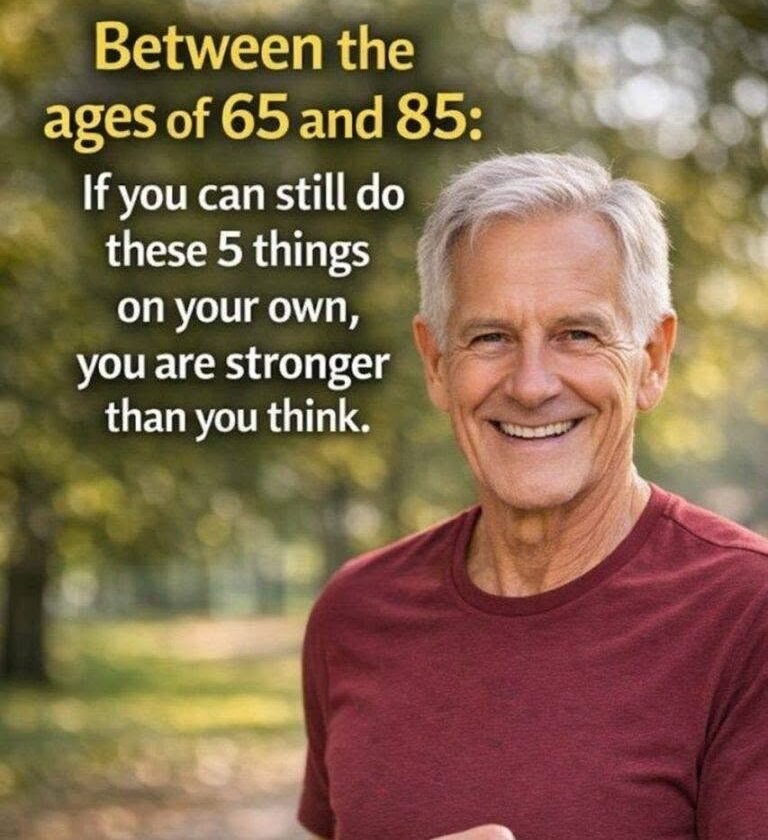
Ah, another classic viral headline designed to catch your eye on social media! Unlike the fear-mongering health clickbait, this particular genre is actually a refreshing, positive spin on functional longevity.
Instead of focusing on arbitrary gym numbers or heavy lifting, gerontologists and physical therapists measure true strength in later life by functional independence.
The 5 everyday physical milestones typically featured in these articles are fantastic indicators of total-body strength, balance, and coordination:
-
Getting Up From a Chair Without Using Your Hands:
-
Why it matters: Often called the “sit-to-stand” test, this relies heavily on powerful quadriceps, glutes, core stability, and joint coordination. Being able to rise smoothly without pushing off with your arms is one of the best predictors of long-term mobility and independence.
-
-
Walking at a Steady Pace for 15–20 Minutes:
-
Why it matters: Continuous walking requires cardiovascular endurance, lower-body stamina, and joint stability. Maintaining a brisk, steady pace shows that your heart, lungs, and circulatory system are working together efficiently.
-
-
Carrying Groceries Without Assistance:
-
Why it matters: Handling weighted bags from the car to the kitchen tests grip strength, arm endurance, and core stability. Grip strength, in particular, is frequently studied by researchers as an incredible overall biomarker for general vitality and physical resilience as we age.
-
-
Maintaining Balance While Standing on One Leg:
-
Why it matters: Balance is a complex orchestra involving your inner ear, vision, nervous system, and fast-twitch muscle fibers. Being able to stand unassisted on one leg for even 10 to 20 seconds is a massive indicator of fall prevention and neurological health.
-
-
Climbing a Flight of Stairs Without Stopping:
-
Why it matters: Navigating stairs demands a combination of single-leg strength, cardiovascular capacity, and dynamic balance against gravity. It requires significantly more power than flat-surface walking, making it a stellar test of functional fitness.
-
These everyday movements prove that staying strong isn’t about looking like a bodybuilder—it’s about preserving your freedom to move through life on your own terms.
Were you looking at a specific list that detailed these movements, or thinking about ways to maintain your strength and mobility?