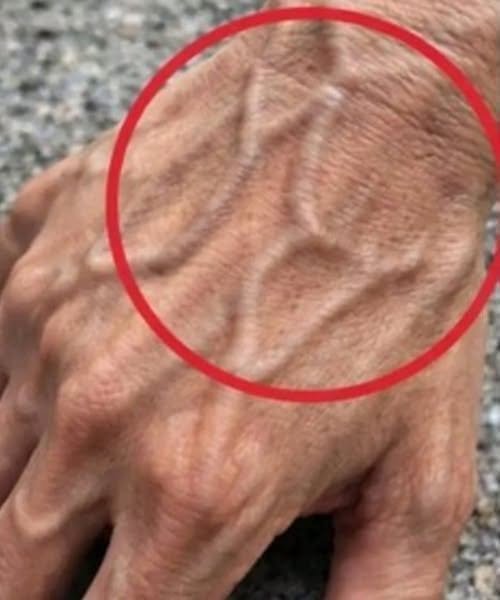
Unlike viral headlines that love to claim visible veins mean one specific, dramatic thing (like a secret disease or a sign of peak athletic perfection), the medical reality is much broader. Seeing your veins can mean several different things depending on your body, your lifestyle, and where the veins are located.
Here is what visible or prominent veins commonly indicate:
—
### 1. You Have Low Body Fat or High Muscle Mass
If your veins are visible on your arms, hands, or abdomen, it often simply means you have a **lower percentage of body fat**. With less fat padding underneath the skin, veins sit closer to the surface. Regular exercise and weightlifting also increase blood flow and muscle size, pushing veins outward and creating a more “vascular” look.
### 2. You’re Aging or Have Fair Skin
* **Skin Thinning and Loss of Elasticity:** As people age, skin naturally thins and loses collagen, making underlying blood vessels much easier to see.
* **Complexion:** Individuals with naturally fair or pale skin tend to have veins that show through much more prominently than those with darker skin tones.
### 3. It’s Temporary (From Heat, Exercise, or Pressure)
* **Hot Weather:** Warm temperatures cause your blood vessels to dilate (expand) as your body works to cool itself down, bringing veins closer to the skin.
* **Physical Exertion:** Heavy lifting or intense workouts temporarily spike your blood pressure and volume, forcing veins to expand.
### 4. You Might Have Varicose Veins or Chronic Venous Insufficiency
If the visible veins are **bulging, twisted, rope-like, or dark purple/blue**—typically appearing on the legs or feet—it can mean the one-way valves inside those veins have weakened. When these valves don’t close properly, blood pools backward instead of efficiently flowing up to the heart. This can cause aching, heaviness, or swelling, particularly after standing or sitting for long periods.
### 5. Hormonal Changes or Genetics
* **Genetics:** If your parents or grandparents had prominent or varicose veins, you are genetically more predisposed to them.
* **Pregnancy:** Hormonal shifts relax vein walls, and a massive increase in blood volume can make veins significantly more noticeable (though they often resolve postpartum).
—
### When to Pay Closer Attention
While most visible veins are completely harmless (either cosmetic or a byproduct of fitness and aging), you should consult a healthcare professional if your prominent veins are accompanied by:
* Pain, throbbing, or a heavy, achy feeling in your legs
* Swelling in your ankles or calves
* Skin discoloration, itching, or sores near the veins
* A vein that suddenly becomes hard, red, warm, or tender to the touch (which can signal surface inflammation or a clot)
*Are your visible veins a recent change, or have you noticed them mostly in a specific area like your hands or legs?*