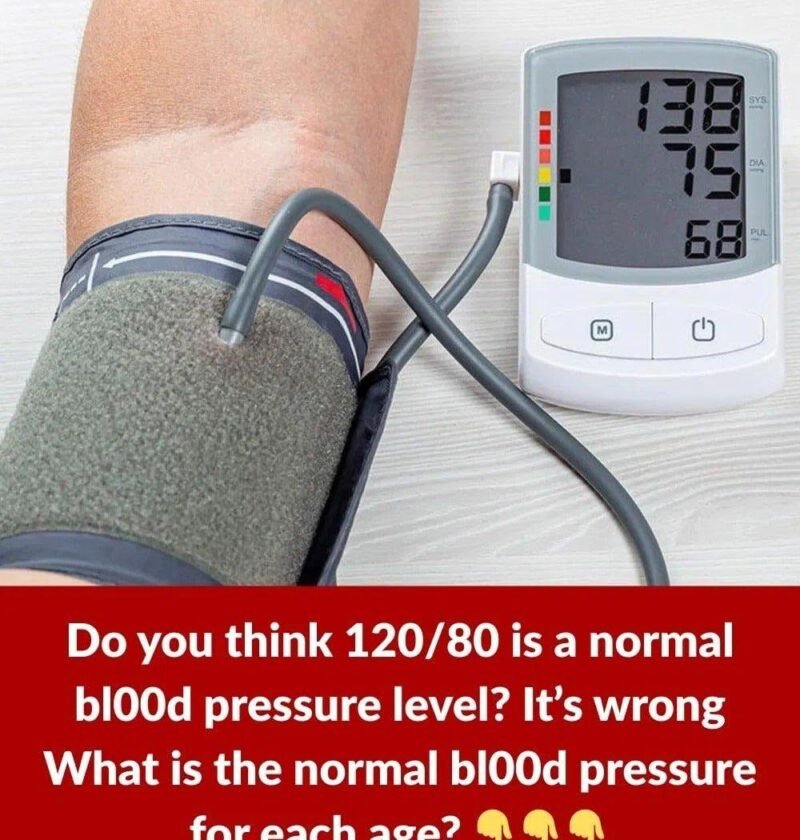
An interesting fact about blood pressure is that the clinical target for a healthy, normal blood pressure does not actually change as you get older.
According to major guidelines (such as those from the American Heart Association and American College of Cardiology), an ideal normal blood pressure for any adult—whether they are 20 or 80 years old—is less than 120/80 mmHg.
While it is true that blood pressure averages tend to rise as people age (because arteries naturally stiffen over time), “common” for an age group is not the same as “optimal or healthy”.
Adult Blood Pressure Categories (Ages 18+)
Regardless of your age, adult blood pressure readings generally fall into these categories:
| Category | Systolic (Top Number) | Diastolic (Bottom Number) | |
| Normal | Less than 120 | and | Less than 80 |
| Elevated | 120–129 | and | Less than 80 |
| Hypertension Stage 1 | 130–139 | or | 80–89 |
| Hypertension Stage 2 | 140 or higher | or | 90 or higher |
| Hypertensive Crisis (Seek immediate care) | Higher than 180 | and/or | Higher than 120 |
Note: If your top and bottom numbers fall into two different categories, the higher category is used. For example, a reading of 118/86 mmHg is considered Stage 1 Hypertension because the bottom number falls into the 80–89 range.
Average Blood Pressure by Age Group
While under 120/80 mmHg remains the gold standard target, population studies show how averages typically shift across decades:
-
Young Adults (18–39 years): Averages generally hover around 110–120 / 68–78 mmHg. Readings on the higher end of normal in this group are an early prompt to focus on lifestyle habits.
-
Middle Age (40–59 years): Averages shift to around 120–130 / 74–82 mmHg. Systolic pressure (the top number) begins a gradual climb due to changes in vessel elasticity.
-
Older Adults (60+ years): Averages often trend closer to 130–140 / 68–80 mmHg. In this age group, the top number frequently continues to rise while the bottom number may level off or drift down.
Special note for older adults: While a doctor will still look closely at readings over 130/80, treatment targets for individuals over 80 are sometimes slightly individualized by physicians depending on overall health, frailty, and other medications.
Blood Pressure in Children and Adolescents
Unlike adults, normal blood pressure for infants, children, and teens does change with age, height, and sex. Pediatric charts use percentiles rather than a single fixed cutoff:
-
Newborns: Typically much lower (e.g., systolic averaging 60–90 mmHg).
-
Children & Adolescents: Normal ranges gradually scale upward as the child grows. For teenagers (ages 14–18), a normal reading typically settles close to adult ranges (generally under 120/80 mmHg). Pediatricians evaluate these readings using specialized percentiles adjusted for the child’s height and age.
Are you looking at a specific blood pressure reading for yourself or someone else, and has a healthcare provider mentioned any concerns about it?