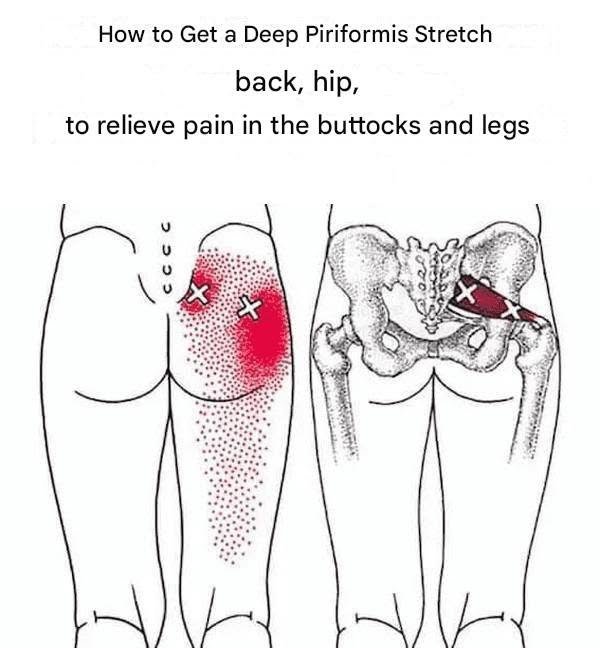
The piriformis is a small, deep muscle located behind the gluteus maximus that connects the lower spine to the top of the thigh bone. When it becomes tight or spasms, it compresses the nearby sciatic nerve, sending severe, radiating pain, numbness, or tingling down the lower back, hip, buttock, and rear leg—a condition known as piriformis syndrome.
The Most Effective Deep Stretches
1.Supine Figure-4 Stretch (Best Starter):Low strain on the spine; ideal for acute tightness.
-
Lie flat on your back on a firm mat with both knees bent and feet flat on the floor.
-
Cross your right ankle over your left knee, creating a “4” shape.
-
Thread your hands through your legs and grasp the back of your left thigh.
-
Gently pull your left knee toward your chest until you feel a deep stretch deep inside your right glute.
-
Hold for 30–60 seconds while taking slow, deep belly breaths. Switch sides and repeat 2–3 times.
2.Seated Chair Stretch:Convenient for office desks or limited mobility.
-
Sit near the front edge of a sturdy chair with your spine upright and feet flat on the ground.
-
Lift your right ankle and rest it across your left knee.
-
Keep your spine straight (do not round your back) and hinge forward at your hips.
-
Press gently down on the inside of your right knee to deepen the stretch.
-
Hold for 30–45 seconds, then switch legs.
3.Pigeon Pose (Deepest Stretch):Advanced mobility required; avoid if you have knee pain.
-
Start on all fours on a padded yoga mat.
-
Bring your right knee forward, placing it behind your right wrist, and angle your right shin across the mat.
-
Extend your left leg straight back behind you, lowering your hips toward the floor.
-
Keep your hips square. Walk your hands forward and lower down onto your forearms or chest.
-
Breathe deeply into your hip area for 45–60 seconds. Repeat on the opposite side.
Crucial Execution Rules
To release the muscle safely without worsening nerve irritation:
-
Hinge at the hips, not the spine: Keep your lower back flat rather than rounding it forward. Rounding transfers the stretch to your spine instead of the piriformis.
-
Target a mild pull, not sharp pain: Stretching too aggressively triggers a protective contraction reflex, causing the muscle to tighten further.
-
Flex your foot: Keep the foot on your stretching leg slightly flexed (toes pulled toward the shin) to protect your knee joint.
-
Breathe into the tension: Exhale slowly as you deepen into the stretch to help relax the neuromuscular system.
When to Consult a Specialist
While stretching resolves most muscle-tightness issues, seek professional medical evaluation if:
-
You experience sudden weakness in your leg or foot (“foot drop”).
-
The pain is severe, constant, or progressively worsening over several days.
-
The pain is accompanied by loss of bowel or bladder control (this requires emergency care).