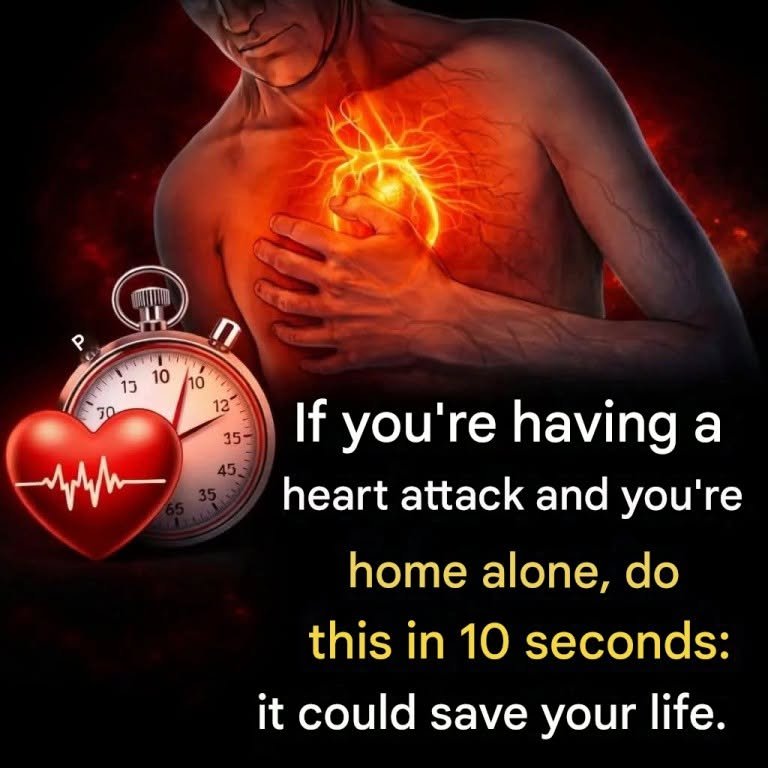
If you think you’re having a heart attack at home, don’t rely on a “10-second trick”
There is no maneuver that can reliably stop a heart attack in 10 seconds. Viral advice such as coughing forcefully, drinking water, or performing a particular breathing technique should not replace emergency treatment.
🚨 What to do immediately
-
Call your local emergency medical service immediately. Don’t wait to see whether the symptoms improve.
-
Stop what you’re doing and sit or lie somewhere safe. Keep the door accessible if you’re alone.
-
If you’re prescribed nitroglycerin for angina, take it exactly as previously instructed.
-
Ask about aspirin: For a suspected heart attack, emergency medical guidance may recommend chewing an aspirin if the person is not allergic and has not been told to avoid aspirin. Follow your local emergency service’s instructions.
-
Don’t drive yourself to the hospital. Emergency medical crews can begin assessment and treatment on the way.
-
If the person becomes unresponsive and isn’t breathing normally, someone nearby should begin CPR and use an AED if available.
Know the warning signs
Possible heart-attack symptoms include pressure, squeezing, or pain in the chest, discomfort spreading to the arm, back, neck, jaw, or stomach, shortness of breath, cold sweating, nausea, or sudden unusual weakness.
Symptoms can be less typical in some women, older adults, and people with diabetes.
The most important “10 seconds” is the time you spend recognizing a possible emergency and getting help started—not performing a home remedy.