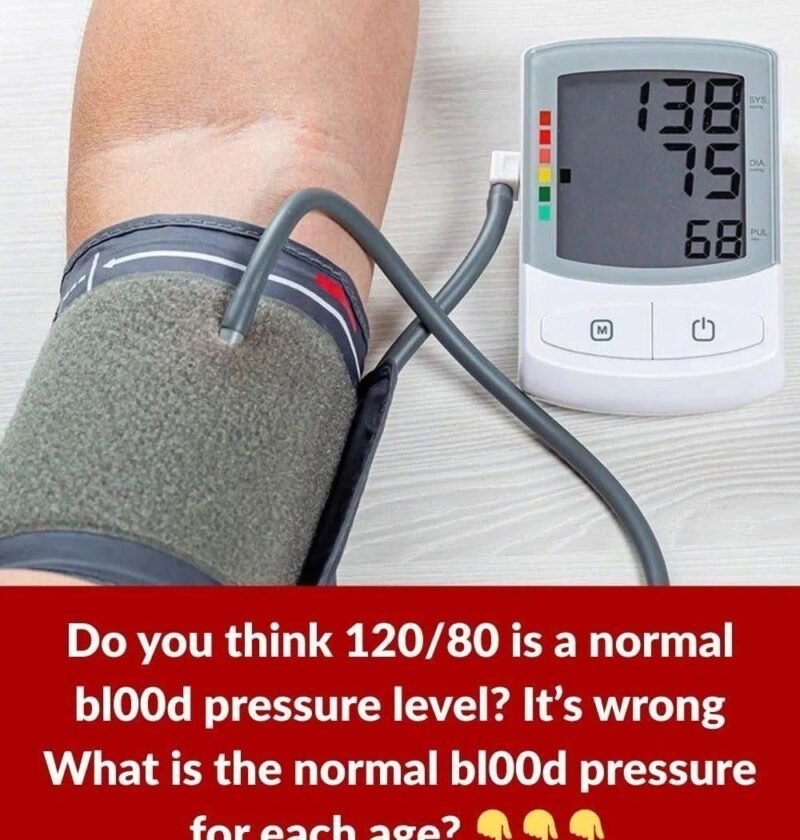
Normal blood pressure by age
A common misconception is that “normal” blood pressure should rise as you get older. For adults, current U.S. guidelines generally use the same blood-pressure categories regardless of age. www.heart.org+1
| Age | Normal/healthy adult range |
|---|---|
| 18–39 | Below 120/80 mmHg |
| 40–59 | Below 120/80 mmHg |
| 60–69 | Below 120/80 mmHg |
| 70–79 | Below 120/80 mmHg |
| 80+ | Below 120/80 mmHg |
How to interpret the numbers
-
Normal: less than 120/80
-
Elevated: 120–129 systolic and less than 80 diastolic
-
Stage 1 hypertension: 130–139 systolic or 80–89 diastolic
-
Stage 2 hypertension: 140+ systolic or 90+ diastolic www.heart.org+1
So, for example, 145/85 isn’t considered “normal for an 80-year-old” simply because of age. However, treatment targets can be individualized based on overall health, other conditions, medications, and the person’s circumstances.
🚨 Very high readings
A reading above 180/120 mmHg is considered severely high. If it occurs with symptoms such as chest pain, shortness of breath, weakness/numbness, vision changes, back pain, or difficulty speaking, seek emergency medical care immediately. www.heart.org
One reading isn’t usually enough to diagnose hypertension. Blood pressure varies during the day, so repeated properly measured readings are more useful. CDC
For children and teenagers, the rules are different: normal blood pressure depends on age, sex, and height, rather than using the adult 120/80 cutoff. CDC
If you give me a reading such as “152/88, age 67”, I can explain exactly what it means and whether it warrants follow-up.