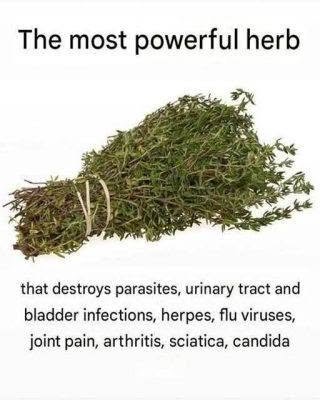
“The Most Potent Herb” for Parasites, UTIs, Herpes, and Flu? What the Evidence Says
There is no single herb proven to destroy parasites, urinary-tract infections, herpes viruses, and influenza viruses. These are very different infections, and claims that one plant can cure all of them go well beyond the available clinical evidence.
Some herbs do have interesting research behind them, but the evidence is much more limited:
-
Cranberry: May help reduce the risk of recurrent UTIs in some people, particularly women with previous UTIs. It does not treat an existing UTI. NCCIH+1
-
Elderberry: Has been studied for colds and influenza-like illness, with some preliminary evidence for symptom relief, but the evidence remains limited. NCCIH+1
-
Garlic, echinacea, and other herbs: Research has investigated their potential antimicrobial or antiviral effects, but there isn’t strong evidence that they can replace established treatments for serious infections. NCCIH+1
Be especially careful with UTIs
A bladder infection is commonly bacterial, and untreated infection can sometimes spread to the kidneys. The CDC recommends professional evaluation and appropriate antibiotic treatment when indicated. CDC+1
Similarly, herpes and influenza are viral infections, so an herb advertised as an “antibiotic” or “parasite killer” shouldn’t be assumed to treat them.
Bottom line: A plant may contain compounds with antimicrobial activity in laboratory experiments, but that doesn’t establish that consuming the plant will cure an infection in humans. If you have a specific herb in mind, tell me its name or send the photo from the post, and I can identify it and explain its actual evidence, traditional uses, and safety.