Here’s a polished, detailed version in the same curiosity-driven style:
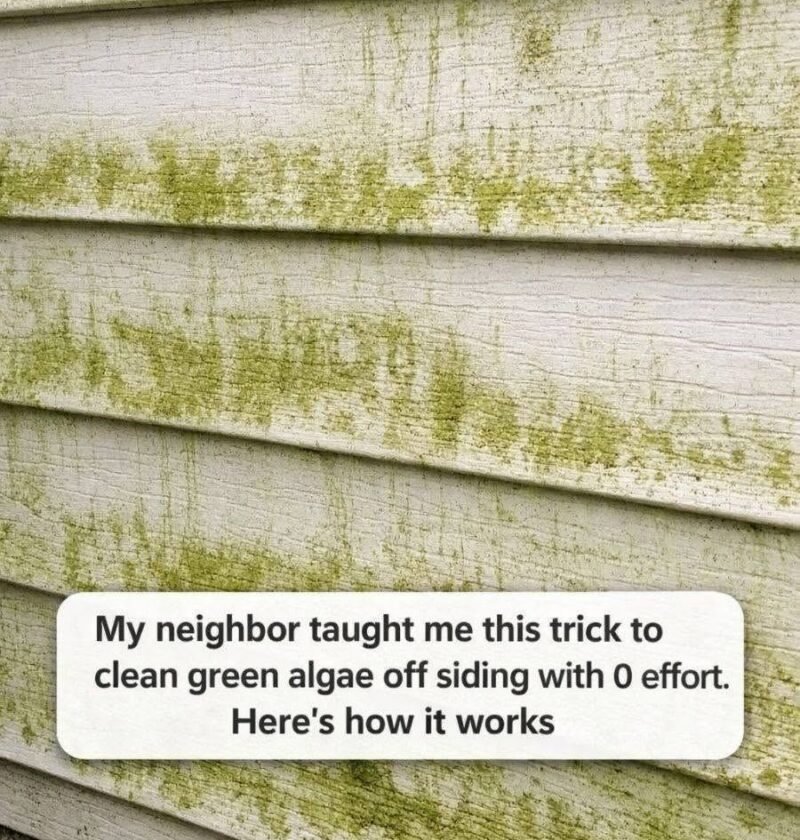
My Neighbor Taught Me This Trick to Clean Green Algae Off Siding With 0 Effort
I used to think getting green algae off house siding meant scrubbing for hours, dragging out a pressure washer, and making a huge mess.
Then my neighbor showed me a much simpler approach.
The secret isn’t scrubbing harder. It’s letting the cleaning solution do most of the work.
Green algae and other organic growth often build up on siding when the surface stays damp and doesn’t get enough sunlight. Instead of attacking the stains with a stiff brush, you can use a siding-safe exterior cleaner designed for algae, mold, and mildew.
Here’s the Basic Trick
Start by choosing a cleaner that’s specifically labeled as safe for your type of siding. This matters because vinyl, painted wood, fiber-cement, and other materials can react differently to cleaning products.
Before cleaning the entire wall, test the solution on a small, inconspicuous area.
Next, remove loose dirt and debris with a garden hose. Then apply the cleaner according to the manufacturer’s instructions, working from the bottom upward if the product recommends that method.
Now comes the part my neighbor emphasized:
Don’t immediately start scrubbing.
Give the cleaner the recommended amount of contact time. This allows it to loosen and break down the organic growth so that much less physical effort is required.
Once the waiting period is complete, rinse the siding thoroughly with a garden hose.
For light algae buildup, you may be surprised by how much comes away without heavy scrubbing.
Why It Works
Algae sticks to siding because of moisture, dirt, and organic buildup. A suitable exterior cleaner helps loosen that material from the surface. Rinsing then removes the loosened residue.
That’s why the trick feels almost effortless: you’re replacing a lot of mechanical scrubbing with time and the right cleaning method.
A Few Important Precautions
Never mix different cleaning chemicals together, especially bleach with ammonia or acidic products.
Protect nearby plants according to the cleaner’s instructions, and avoid letting concentrated cleaning solutions sit on landscaping.
Also, don’t assume that stronger automatically means better. Using too much product or leaving it on the siding too long can damage certain finishes.
And be careful with pressure washers. High pressure can force water behind siding, damage paint, or cause other problems if used incorrectly. For many homes, a garden hose and an appropriate siding cleaner are enough for routine algae removal.
Finally, if the green growth keeps returning quickly, look for the underlying moisture problem. Overhanging branches, clogged gutters, poor drainage, or consistently damp areas can create the conditions algae likes.
So the next time your siding starts turning green, don’t automatically reach for a scrub brush.
Choose the right cleaner, apply it properly, give it time to work, and let the rinse do the heavy lifting.
That little change in technique can turn a miserable cleaning job into a surprisingly easy one.