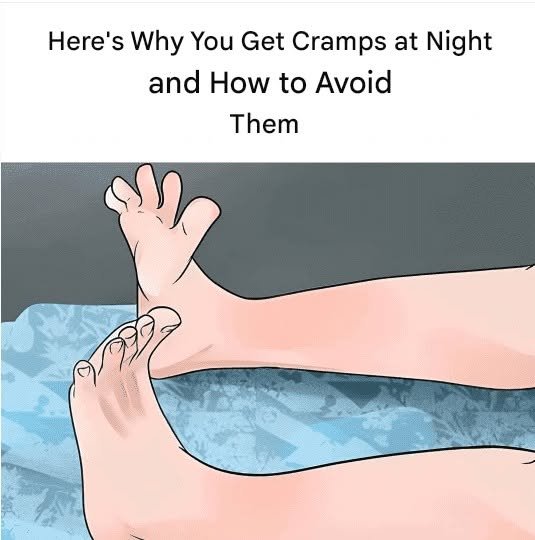
Why Do We Get Cramps at Night?
Nighttime muscle cramps, especially in the calves, feet, or thighs, are very common. They happen when a muscle suddenly contracts and won’t relax. In many cases, there isn’t a single identifiable cause.
Common reasons include:
- Muscle fatigue or overuse from exercise or prolonged standing.
- Dehydration, particularly after heavy sweating or inadequate fluid intake.
- Sitting or sleeping in certain positions that shorten the calf muscles.
- Older age, as muscle cramps become more common over time.
- Pregnancy, especially during the second and third trimesters.
- Certain medications, including some diuretics (“water pills”), though many commonly blamed medications are not a proven cause.
- Underlying medical conditions, such as nerve disorders, kidney disease, or poor circulation in some cases.
What can help prevent them?
- Stretch your calf and leg muscles before bed.
- Stay well hydrated, especially after exercise or in hot weather.
- Avoid sitting or standing in one position for very long periods.
- Wear supportive footwear if you’re on your feet a lot.
- If a cramp occurs, gently stretch the affected muscle and massage it. Applying heat may also help.
Do you need magnesium?
Not necessarily. Most nighttime leg cramps are not caused by a magnesium deficiency. Magnesium supplements have not consistently been shown to help most people, although they may be appropriate if a deficiency is confirmed or in certain situations, such as some pregnancies. Talk with a healthcare professional before starting supplements, especially if you have kidney disease.
When to seek medical advice
See a healthcare professional if cramps:
- Are frequent or very painful.
- Cause persistent muscle weakness.
- Are associated with swelling, redness, or skin changes.
- Begin after starting a new medication.
- Regularly disrupt your sleep despite self-care.
Occasional nighttime cramps are usually uncomfortable but not dangerous, and simple measures like stretching and hydration are enough for many people.