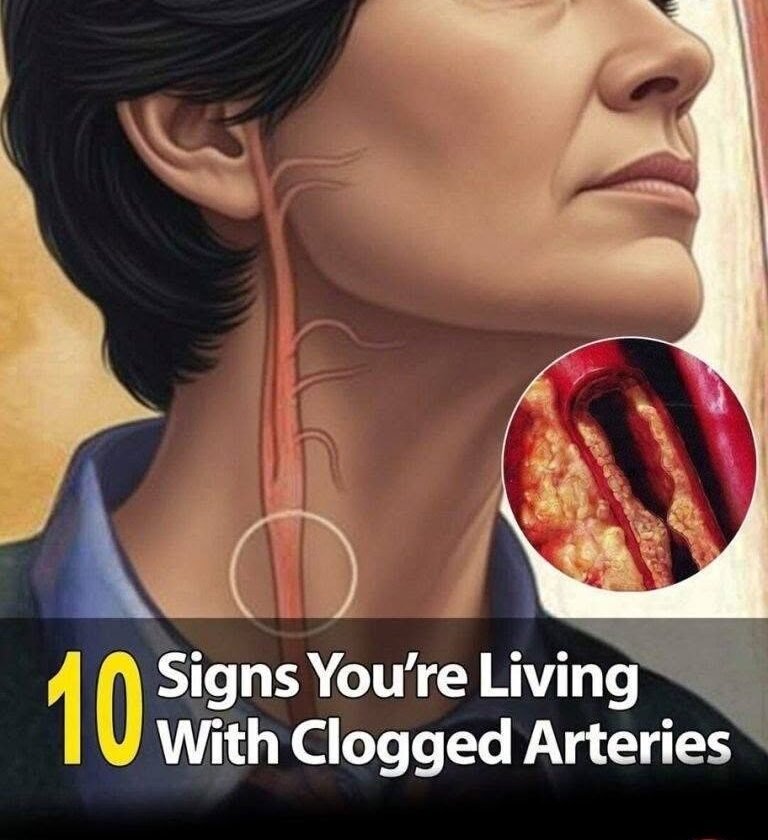
Importantly, it can cause no symptoms until the narrowing becomes significant, so symptoms alone can’t reliably rule it in or out.
10 warning signs worth taking seriously
-
Chest pressure, tightness, or pain — especially with exertion and relieved by rest; this can indicate reduced blood flow to the heart.
-
Shortness of breath, particularly during activity.
-
Pain, aching, or cramping in the legs when walking that improves after resting — a classic symptom of peripheral artery disease.
-
Cold feet or legs, especially when one side feels noticeably colder.
-
Numbness or weakness in a leg or foot.
-
Slow-healing cuts or sores on the feet or legs.
-
Skin color changes in a foot or leg, such as unusual pallor, bluish coloration, or redness.
-
Weak or difficult-to-feel pulses in the feet.
-
Sudden neurological symptoms such as facial drooping, arm weakness, speech difficulty, or sudden vision problems — potentially indicating reduced blood flow to the brain.
-
Erectile dysfunction, which can sometimes be associated with blood-vessel disease