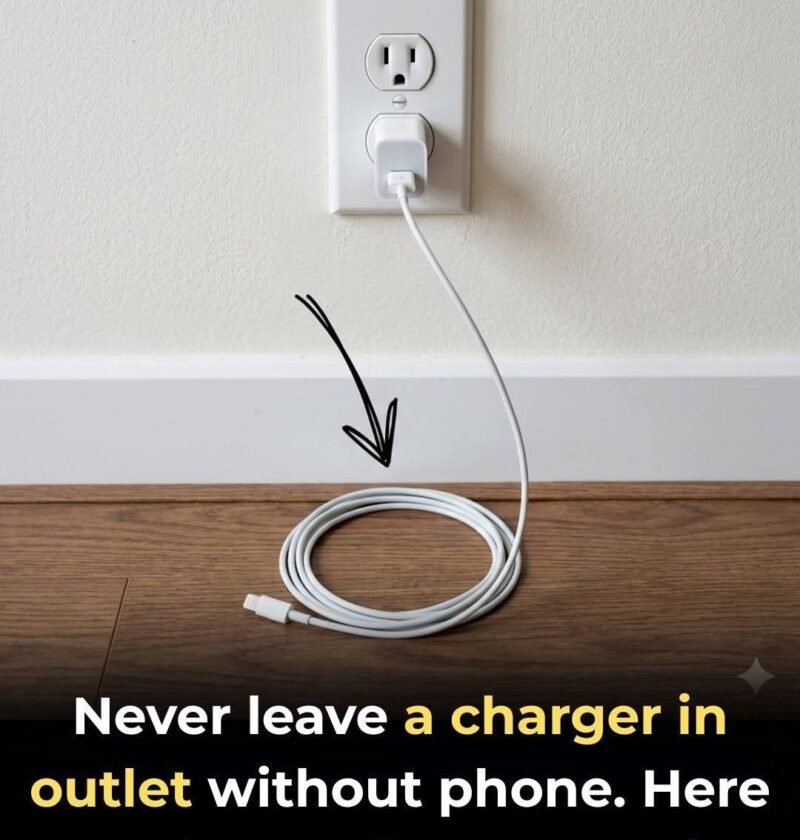
If you’re turning this into an informative post, I’d avoid implying that an unplugged charger is automatically dangerous. The more accurate message is that leaving chargers plugged in unnecessarily has a few small but real downsides, especially with damaged or poor-quality chargers.
Never Leave a Charger Plugged In Without Your Phone? Here Are 6 Reasons to Consider Unplugging
-
It still uses a small amount of electricity
Modern chargers generally draw very little power when nothing is connected, but the consumption isn’t necessarily zero. Unplugging chargers when they’re not needed eliminates that standby draw. -
Heat can build up
A charger that’s faulty, damaged, covered, or poorly ventilated can become warm. Excessive heat is undesirable for electrical equipment and can contribute to failure. -
Cheap or counterfeit chargers can be risky
Chargers that don’t meet appropriate electrical-safety standards may have inadequate insulation, protection, or component quality. Using reputable, certified chargers is more important than simply remembering to unplug them. -
Damaged cables and plugs can become a hazard
Frayed cables, cracked housings, bent pins, or loose connections can increase the risk of electrical faults. A damaged charger should be replaced rather than left plugged in. -
Power surges can damage electronics
A charger connected to the wall remains electrically connected even when your phone isn’t attached. During an electrical surge, connected equipment can potentially be affected. Unplugging nonessential electronics provides an extra layer of protection. -
It reduces unnecessary clutter and wear
Leaving chargers plugged in can contribute to tangled cables, accidental pulling, and strain on plugs or outlets. Keeping unused chargers stored away can make the area safer and easier to manage.
The important takeaway
You don’t need to panic if you occasionally leave a modern, undamaged charger plugged in. The bigger safety concerns are damaged, counterfeit, overloaded, or poorly ventilated charging equipment.
For extra caution: use reputable chargers, keep them dry and ventilated, replace damaged cables, avoid covering chargers while they’re operating, and unplug equipment when it’s not needed—particularly if you’re leaving home for an extended period.