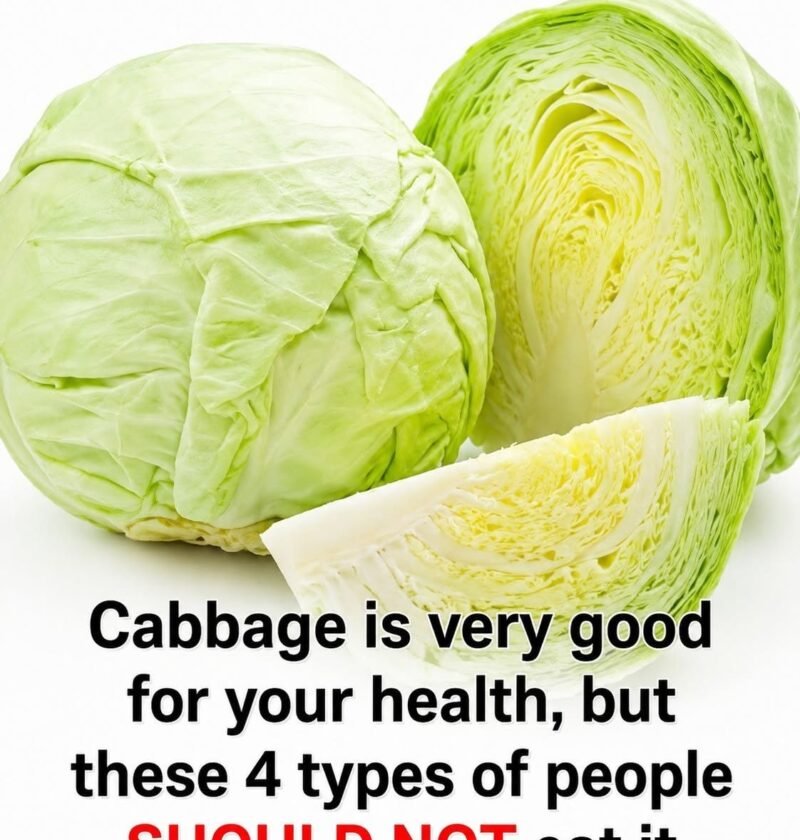
Cabbage is nutritious and safe for most people. There aren’t four groups who universally need to avoid it, but some people may need to limit it or discuss their intake with a clinician.
4 situations where caution may be appropriate
-
People taking warfarin
-
Cabbage contains vitamin K, which can affect warfarin. The key is usually keeping vitamin-K intake consistent, rather than completely avoiding cabbage. Don’t change your diet substantially without discussing it with your clinician.
-
-
People with irritable bowel syndrome (IBS)
-
Cabbage contains fermentable carbohydrates that can cause gas, bloating, or abdominal discomfort in some people. Portions may need to be reduced depending on individual tolerance.
-
-
People with certain thyroid conditions
-
Cabbage and other cruciferous vegetables contain compounds called goitrogens. Normal amounts of cooked cabbage are generally not a concern for most people, but those with thyroid disease should follow their clinician’s dietary advice rather than eliminating cabbage automatically.
-
-
People who develop significant digestive symptoms after eating it
-
Anyone who repeatedly experiences severe bloating, abdominal pain, diarrhea, or other symptoms after cabbage may benefit from limiting it and discussing the symptoms with a healthcare professional.
-
Bottom line: For most people, cabbage can be part of a healthy diet. Cooking it can also make it easier to tolerate for people who experience gas or bloating.